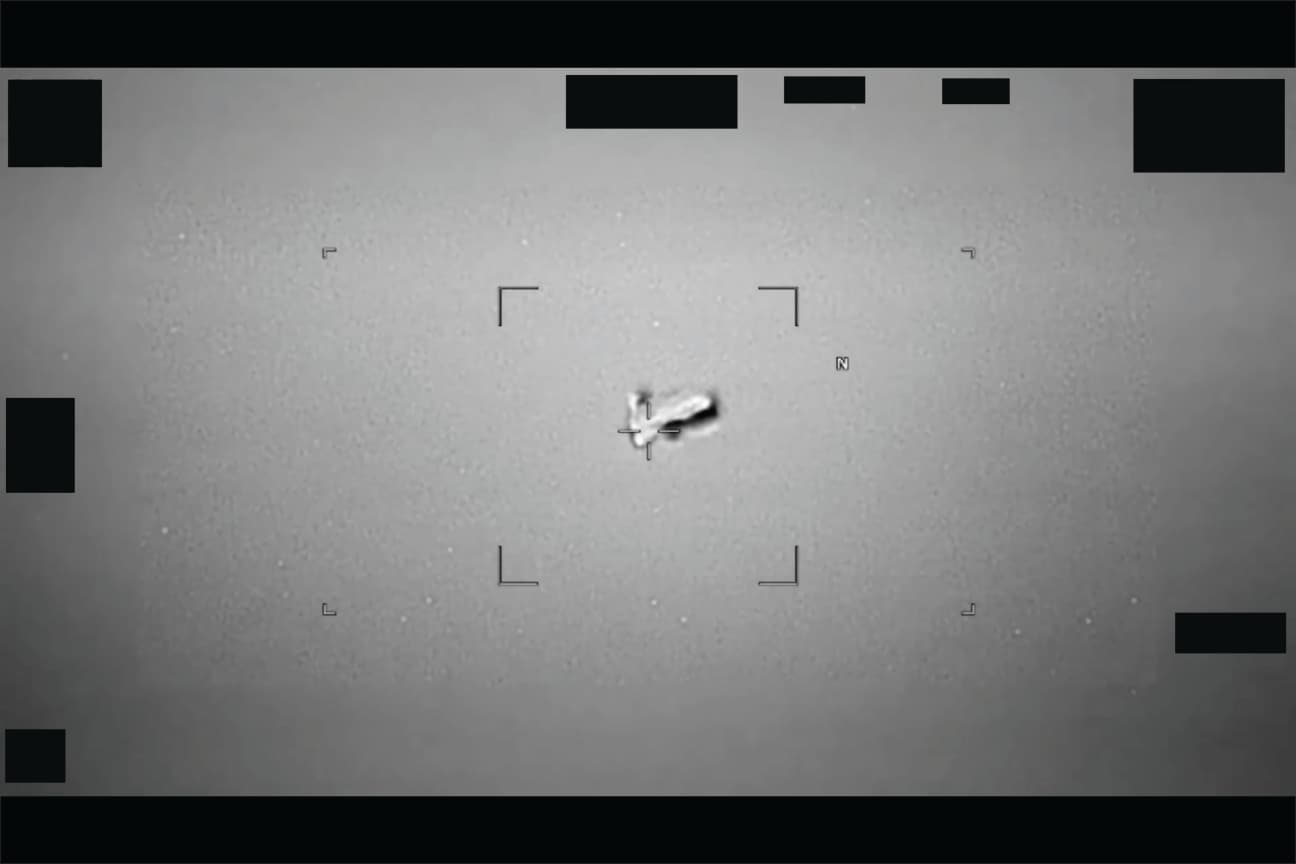
Mission Report DOW-UAP-D28: Unidentified Anomalous Phenomenon Over Al Asad Air Base, Iraq, September 2024
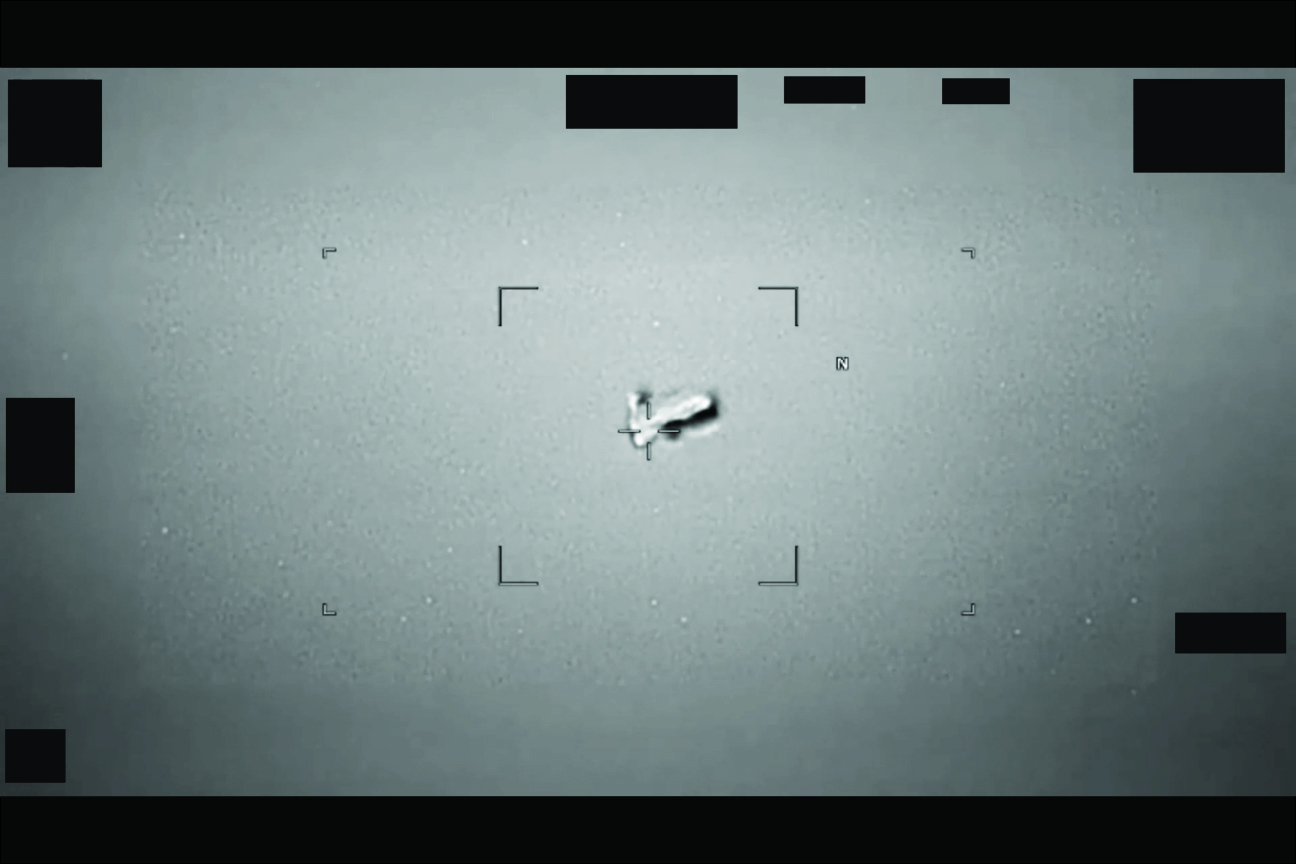
Source file: dow-uap-d28-mission-report-east-china-sea-2024.pdf Originating agency: Department of Defense / DoD Modern UAP — USCENTCOM Date range: September 20–21, 2024 Page count: 6 (all reviewed) High-significance pages: 1 (primary narrative), 5 (UAP details), 6 (full case description)
Important Researcher's Note
The filename references the "East China Sea," but the document itself concerns an incident that occurred over Al Asad Air Base (AAAB) in Iraq, within the USCENTCOM area of responsibility. There is no connection to the Taiwan Strait region. The PDF version may have received an erroneous name, or this may reflect a deliberate scrambling of the geographic classification. All analysis below is based on the actual content.
Official Blurb (from war.gov)
This document is a Mission Report (MISREP), a standardized reporting form the U.S. Military uses to record the circumstances surrounding its operations. U.S. military services often use MISREPs to report Unidentified Anomalous Phenomena (UAP) to AARO. The GENTEXT, or "general text" section of these reports often contains important qualitative, contextual information, distinguishing it from the more quantitative, or numerical, data found elsewhere in the report. While conducting a weapons calibration test, U.S. military operators reported observing a lens flare via MX-20 and MX-25 IR sensors after firing an AGM-176 Griffin air-to-surface missile. The operators described the source of the flare as a UAP moving through the aircraft's sensor's field-of-view at a high rate of speed. The reporter assessed that the flare was associated with "a significant heat source." All descriptive and estimative language contained in this report reflects the reporter's subjective interpretation at the time of the event. Such characterizations should not be interpreted as a conclusive indication of the presence or absence of any intrinsic object features or performance characteristics.
Summary
On September 20, 2024, during an Armed Overwatch mission as part of Operation INHERENT RESOLVE over Al Asad Air Base in Iraq, a U.S. special-operations crew observed an unidentified anomalous phenomenon that passed between the release of munitions and their impact on the target. The UAP produced a significant thermal signature, flew at high speed on a seemingly predetermined path, and did not respond to the aircraft's presence. In addition, an anomalous phenomenon was observed: it is possible an object detached from the primary UAP before it left the sensor's field of view.
Research Article
Introduction
Mission report DOW-UAP-D28, classified SECRET//REL TO USA, FVEY and released on October 24, 2025 by Major General Richard A. Harrison, USCENTCOM Chief of Staff, describes a UAP incident that occurred at the heart of the Middle East operations theater. The document was filed as a mission report (MISREP) with internal number 10431840, by unit SOTU 016, under 16 SOS (Special Operations Squadron) and 27 SOW (Special Operations Wing).
Mission Background
The mission aircraft was a single special-attack aircraft that launched from base OKAS on September 20, 2024 at 17:40 Zulu. It reached the area of operations at 19:30 Zulu and departed at 23:23 Zulu, after 3 hours and 53 minutes on station. The mission ended with a landing at OKAS at 00:46 Zulu on September 21, with a total mission time of 7 hours and 6 minutes.
The mission included a weapons calibration, during which 20 rounds of 105 mm, 101 rounds of 30 mm, and one AGM-176 rocket were expended. The weapons and sensor suite clearly indicates an AC-130 gunship of U.S. Special Operations Command (AFSOC). The aircraft was performing an Overwatch role over the ROZ (Restricted Operating Zone) designated RAINDROP, near Al Asad Air Base in Iraq.
The UAP Incident Description
First contact: The UAP was detected at 20:27:59 Zulu on September 20, 2024.
Location: Grid 38SKC55 (the immediate vicinity of Al Asad Air Base, Iraq).
Circumstances of detection: The weapons officer (WSO) and the combat systems officer (CSO) identified an object flying through the aircraft's sensors at high speed. The circumstances were critical: the UAP passed between the moment of munition release and the moment of impact on the target. The aircraft was at FL130 (roughly 13,000 feet) flying on heading 096 degrees at 170 knots.
Sensor signatures: The UAP created an infrared lens flare (IR Lens Flare) on both the MX-20 and the MX-25 sensors. This indicates an extremely significant heat source. The IR signature was detectable by both sensor systems.
Movement characteristics: The UAP flew at very high speed through the sensor's field of view. The path of movement appeared predetermined and not in response to the object's detection of the aircraft. The crew maintained laser energy until the munition struck the target, after which the UAP was not seen again.
Anomalous phenomenon: The most serious finding in the document is the note that "it is unknown at this time whether an object detached itself from the primary UAP immediately before leaving the sensor's field of view." This finding suggests multi-object activity, which went unexplained.
Crew Assessment
The aircraft commander, a captain, assessed the UAP as benign in terms of intent. No response of any kind was observed from the UAP to the observers' actions. No additional party was reported, and no additional aircraft was in the air. The UAP did not damage equipment and caused no harm to personnel.
The crew was unable to reacquire the UAP after the event.
Analysis and Significance
What the UAP was not: The circumstances rule out several simple explanations. A known hostile aircraft would have produced a different response. Munition fragments or ballistic debris do not produce an independent, significant IR signature on two different sensors. A commercial drone does not fly "at high speed" through an advanced military sensor's field of view and create a lens flare on an MX-25.
The central dilemma: The UAP appeared precisely between munition release and impact — that is, in the shortest and most critical window of the mission. There is no logical explanation for this timing.
Absence of response: "The path of movement appeared predetermined and not in response to detection by [the aircraft]" — this phrasing indicates a system not reactive to its environment, in contrast to a human-operated drone.
The possibility of a detached object: If an object did indeed detach from the primary UAP, this represents a capability with no explanation in any known technology operating in the area.
Operation INHERENT RESOLVE context: Al Asad Air Base was the target of Iranian missile strikes in January 2020. The area is known for activity by various actors. Even so, even a highly sophisticated adversary does not explain the sensor findings.
No Indication of Chinese Activity
Contrary to the filename's suggestion of the East China Sea, there is no evidence in the document of any connection to Chinese activity. The location is Iraq, the command is CENTCOM, and the relevant regional actors are militia organizations and Iran, not China.
Key People
| Person | Role |
|---|---|
| MG Richard A. Harrison | USCENTCOM Chief of Staff; approves the document release on October 24, 2025 |
| Captain (name classified) | POC officer, 16 SOS, 27 SOW — primary observer and UAP reporter |
| SrA (name classified) | QC officer, 1 SOW |
| SSgt (name classified) | Report approver, ACF unit, 379 AEW, operations center 609 CAOC |
Locations
| Location | Description |
|---|---|
| Al Asad Air Base (AAAB), Iraq | Center of activity |
| ROZ RAINDROP | Restricted Operating Zone where the incident occurred |
| OKAS | Launch and recovery base (identified as a classified air base) |
| 38SKC55 | MGRS coordinate of the aircraft's position at the time of the incident |
Incidents
| Incident | Date | Location | Pages |
|---|---|---|---|
| Aircraft launch for weapons calibration and armed overwatch | September 20, 2024, 17:40 Zulu | Base OKAS | 4 |
| Arrival on station, start of weapons calibration | September 20, 2024, 19:30 Zulu | ROZ RAINDROP, Al Asad | 1, 4 |
| Receipt of fire order, use of AGM-176 | September 20, 2024, 20:25 Zulu | Area 38SKC55 | 1, 6 |
| UAP detection between munition release and impact | September 20, 2024, 20:27:59 Zulu | 38SKC55, FL130 | 5, 6 |
| UAP creates IR Lens Flare on MX-20 and MX-25 | September 20, 2024, 20:27–28 Zulu | Aircraft sensor field of view | 6 |
| Possible object detaching from the UAP before leaving the field of view | September 20, 2024, 20:28 Zulu | Aircraft sensor field of view | 6 |
| Departure from station | September 20, 2024, 23:23 Zulu | ROZ RAINDROP | 4 |
| Landing at OKAS | September 21, 2024, 00:46 Zulu | Base OKAS | 1, 4 |
Notable Quotes
"UAP FLEW THROUGH [classified] SENSOR IN BETWEEN MUNITION RELEASE AND MUNITION IMPACT" (Page 5 — on UAP behavior)
"PATH OF MOVEMENT APPEARED PREDETERMINED AND NOT IN RESPONSE TO [the aircraft]'S DETECTION" (Page 6 — on the path of movement)
"IT IS UNKNOWN AT THIS TIME WHETHER AN OBJECT DETACHED ITSELF FROM THE PRIMARY UAP IMMEDIATELY BEFORE LEAVING THE SENSOR FIELD OF VIEW." (Page 6 — on the separation phenomenon)
"UAP CREATED IR LENS FLARE ON MX-20 & MX-25 SENSORS, INDICATING A SIGNIFICANT HEAT SOURCE. THE UAP MOVED AT A HIGH RATE OF SPEED THROUGH THE SENSOR FIELD OF VIEW." (Page 6 — on the thermal signature)
Images
1 image - click any image to enlarge
Related Articles
- DoW/DoD · 2022
Unresolved UAP Report DOW-UAP-PR20: Digitally Annotated Still Image, Kuwait, May 2022
An Unresolved UAP Report (PR series) submitted by USCENTCOM to AARO, consisting of a single still image captured by a U.S. military sensor system in…
- DoW/DoD · 2022
Mission Report: UAP Observation in the Middle East, May 2022
A declassified Mission Report (MISREP) under number undefined-7473483, submitted within the U.S. Air Force's Operation INHERENT RESOLVE. A single aircraft from the 432 AEW conducted…
- DoW/DoD · 2023
Mission Report DOW-UAP-D20: Unidentified Object Observation Over Syria, March 2023
On March 31, 2023 a two-ship of U.S. Air Force F-16CM aircraft launched from Prince Sultan Air Base to fly a Defensive Counter Air mission…
- DoW/DoD · 2022
Mission Report DOW-UAP-D12: Observation of an Unidentified Anomalous Phenomenon in Iraq, May 2022
A secret U.S. Air Force MISREP produced by the 196 ATKS within Operation INHERENT RESOLVE in Iraq, describing a reconnaissance mission of nearly 19 hours…