Range Fouler Debrief Form — Middle East Theater, May 2020
Source file: dow-uap-d38-range-fouler-debrief-middle-east-may-2020.pdf Originating agency: Department of Defense / DoD Modern UAP Date range: 14 May 2020 Page count: 1 (read in full) High-significance pages: Page 1
Official Blurb (from war.gov)
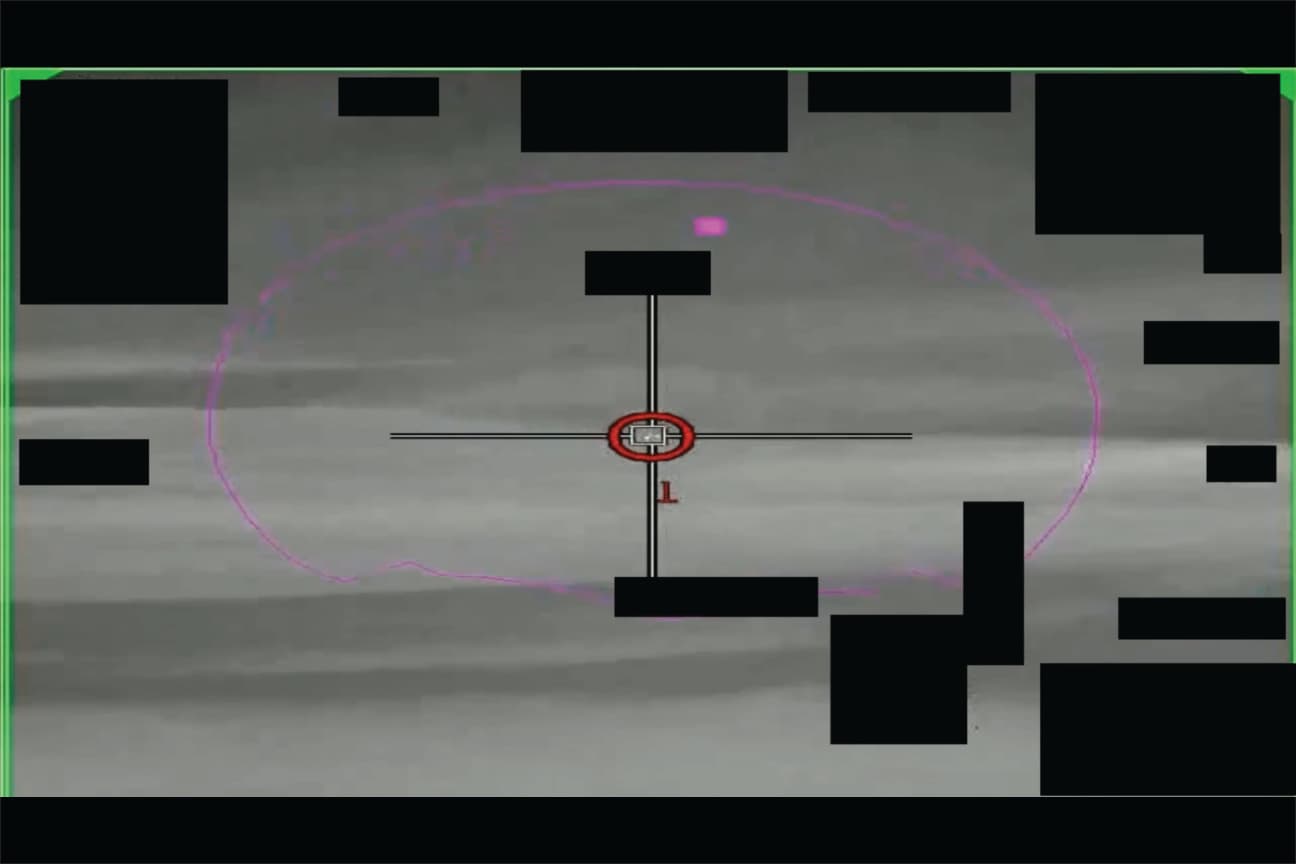
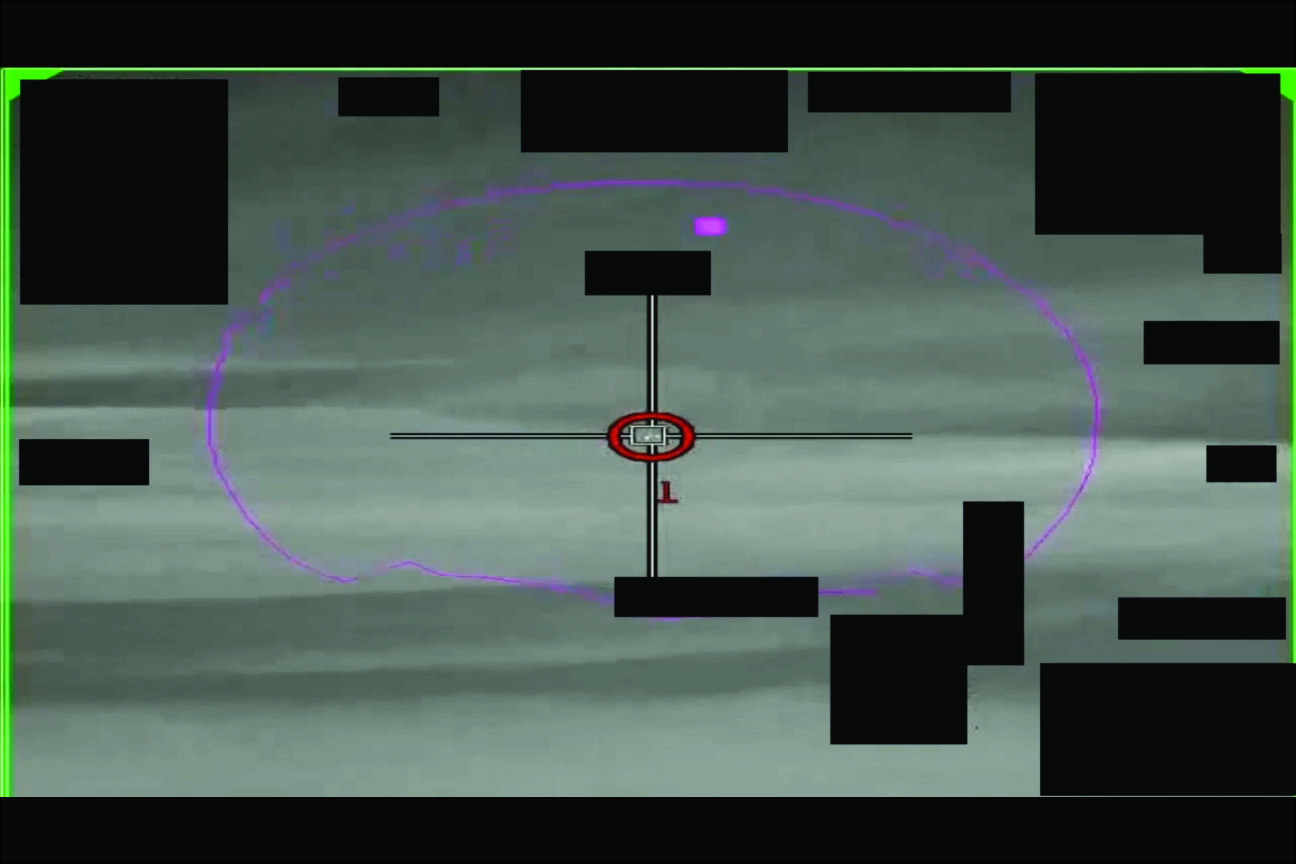
This document is a Range Fouler Debrief, a standardized reporting form the U.S. Navy uses to record the circumstances surrounding an unauthorized intrusion into controlled airspace during active military operations or training. These reports contain a narrative description of the observer's experiences. A U.S. military operator reported observing a "solid white object [fly] through the [field-of-view]. The reporter described the UAP as making erratic [movements] above the water. All descriptive and estimative language contained in this report reflects the reporter's subjective interpretation at the time of the event. Such characterizations should not be interpreted as a conclusive indication of the presence or absence of any intrinsic object features or performance characteristics.
Summary
This document is a Range Fouler Debrief Form re-reviewed for release by Brigadier General Richard A. Harrison, USCENTCOM Chief of Staff. It describes a UAP incident that occurred on 14 May 2020 at 20:40 UTC during an ISR (intelligence, surveillance, and reconnaissance) mission in the Middle East theater. The aircrew detected a uniform white object that passed through the sensor's field of view, performed erratic movements over the water, and was observed at 4x zoom before it was lost. The document was released to AARO on 26 January 2026 under USCENTCOM MDR 26-0019.
Research Article
Introduction
On 14 May 2020, while a U.S. fighter aircraft was flying an ISR mission in the Middle East theater, an unidentified object passed through the field of view of the sensor system. The report was submitted through the SPEAR system, which stores and analyzes UAP incidents and strips out aircrew-identifying information to preserve anonymity. This document, identified as DOW-UAP-D38, constitutes primary military-source testimony of an over-water UAP incident in the Middle East region.
Definition and location data
The incident was logged on 14 May 2020 at 20:40:00 (UTC), at night. The working area and point of contact were identified as 28314, with latitude coordinate 28314 and longitude N 49524 E, indicating a geographic area in or near the Persian Gulf. Contact altitude was recorded as 20,000 feet and noted as constant. The mission was characterized as ISR — an intelligence, surveillance, and reconnaissance tasking.
Object characteristics
The object was described as solid and entirely white, with a round shape. None of the following characteristics were marked as applicable: square, balloon-shaped, wings or fuselage structure, moving parts, metallic, markings, transparent, opaque, or reflective. No visible propulsion source was observed. These characteristics are consistent with reports of UAP that exhibit no signs of conventional propulsion.
Sensor data
The crew executed the mission using the ULTN (Ultra-Low Temperature Night) method with the "Black Hot/Lin" setting of the ATFLIR reconnaissance camera, the standard configuration for infrared imaging in Forward Looking Infrared (FLIR). The object passed through the sensor's field of view (FOV) while the camera was active. No automatic ATFLIR lock was achieved (ATFLIR Autotrack was not engaged). An AIM-9X self-lock was also not achieved. The radar Stable Trackfile was noted as "Intermittent," indicating the radar could not maintain a stable track.
Incident description in the crew's words
While performing the ISR tasking with ULTN/Black Hot/Lin settings, a uniform white object passed through the field of view. Contact was temporarily lost but reacquired shortly thereafter. The crew was able to track the object as it performed erratic movements over the water. During the track the crew managed to obtain 4x zoom on the object, but lost it again due to poor track-frame placement. The sensor operator described having to continuously manipulate the sensor to maintain eyes on the object, evident in the way the water waves in the background were visible and then disappeared from the display in accordance with sensor movement.
Absence of wind data
The wind direction and wind speed fields at contact altitude were left blank on the form. The absence of these data limits the ability to rule out a routine explanation such as a balloon or wind-driven body. That said, the description of erratic movements over the water points to characteristics inconsistent with bodies drifting on the wind.
The SPEAR reporting framework
The form was submitted through the SPEAR system, used to collect UAP reports from pilots and sea and air aircrew. The system guarantees complete anonymity of the reporter: name, rank, squadron name, and any other identifying detail are removed before the information is analyzed. The report was retained, per procedure, as a PDF in the format "date_squadron_RF.pdf," and display tapes in WMV format were uploaded to a central data repository.
Significance
This incident presents several points of interest. First, the location of the UAP over the water in the Persian Gulf area is consistent with the many maritime incidents documented by the U.S. Navy. Second, the sensor operator's inability to maintain a stable lock, together with the intermittent radar track, suggests the object presented characteristics that prevented the standard sensors from operating optimally. Third, the description of erratic movements over the water is a recurring feature in UAP accounts recorded by sea and air aircrew. The incident was documented and released as part of the broad re-review wave conducted by USCENTCOM in January 2026.
Key People
| Role | Detail |
|---|---|
| BG Richard A. Harrison | USCENTCOM Chief of Staff; signatory of the declassification release |
| Aircrew (anonymous) | Pilot and sensor operator; identifying details removed by the SPEAR system |
Locations
| Location | Description |
|---|---|
| Middle East theater | General area of the incident |
| Coordinates 28314 N / 49524 E | Point of contact, corresponding to the Persian Gulf area (near the coasts of Iran or Saudi Arabia) |
| Altitude 20,000 ft | Contact altitude |
Incidents
| Incident | Date | Location | Pages |
|---|---|---|---|
| Round white object passes through ATFLIR FOV, performs erratic movements over the water, intermittent track | 14 May 2020, 20:40 UTC | Coordinates 28314N/49524E, altitude 20,000 ft, Middle East theater | 1 |
Notable Quotes
"While preforming an ISR tasking (ULTN/Black Hot/Lin), a solid white object flew through the FOV. There was a temporarily lose of the object but re-acquired shortly thereafter. The crew was able to follow the object as it appeared to make erratic moments above the water. During the follow, crew was able to obtain 4x zoom on the object but lost the object due to poor track placement. While following, the sensor operator was continuously manipulating the sensor to maintain eyes on the object. This is apparent by the waves of the water in the background being visible and not being visible." — Page 1, crew narrative
Related Video
Source: DVIDS · U.S. Department of Defense
Images
1 image - click any image to enlarge
Related Articles
- DoW/DoD · 2020-07-16
Mission Report DOW-UAP-D65: Three UAP Observations in the Persian Gulf, July 16, 2020
USCENTCOM Mission Report Misrep 4472514 documents three separate observations of an unidentified aerial phenomenon during a single ISR sortie over the Persian Gulf, the Strait…
- DoW/DoD · 2020-09-15
Mission Report DOW-UAP-D62: UAP Observation, Link-Loss Events, and Iranian Air-Defense Intercepts over the Strait of Hormuz, September 2020
Mission Report MISREP 4782130 from the U.S. Air Force 482 ATKS / 432 AEW documents an intense 21-hour ISR sortie over the Strait of Hormuz…
- DoW/DoD · 2020
Mission Report: Formation of Unknown Flying Objects over the Persian Gulf, August 2020
MISREP number 4685903, filed by the 482 ATKS unit of the 432 AEW under USCENTCOM, documents a 21-hour ISR/SIGINT sortie over the Arabian Gulf, Strait…
- DoW/DoD · 2020-10-01
Mission Report DOW-UAP-D63: UAP Observation in the Strait of Hormuz, October 2020
Mission Report MISREP 4871281 from the 482 ATKS / 432 AEW under USCENTCOM documents a 21-hour ISR sortie from OKAS (Ali Al Salem, Kuwait) over…