Mission Report DOW-UAP-D63: UAP Observation in the Strait of Hormuz, October 2020
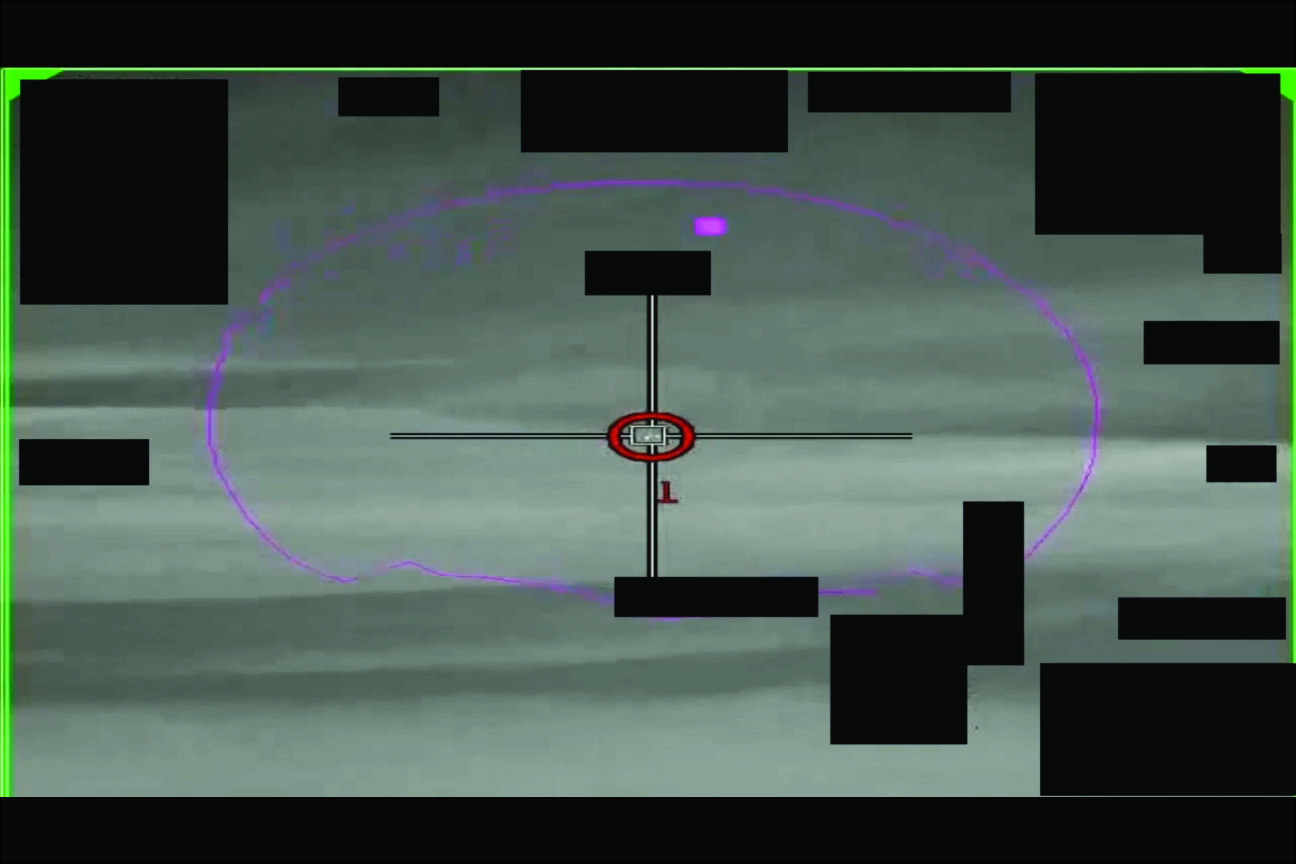
Source file: dow-uap-d63-mission-report-strait-of-hormuz-october-2020.pdf Originating agency: Department of War / Department of Defense (USCENTCOM / AFCENT) MISREP number: 4871281 (USCENTCOM MDR 26-0028) Date range: October 1–2, 2020 (012249Z to 022003Z OCT 2020) Page count: 8 (all read) High-significance pages: page 1 (Narrative, UAP cited at 1829Z), page 5 (GENTEXT/ISR), pages 6–8 (GUARDCALL sections)
Official Blurb (from war.gov)
This document is a Mission Report (MISREP), a standardized reporting form the U.S. Military uses to record the circumstances surrounding its operations. U.S. military services often use MISREPs to report Unidentified Anomalous Phenomena (UAP) to AARO. The GENTEXT, or "general text" section of these reports often contains important qualitative, contextual information, distinguishing it from the more quantitative, or numerical, data found elsewhere in the report. A U.S. military operator reported observing a UAP. All descriptive and estimative language contained in this report reflects the reporter's subjective interpretation at the time of the event.
Summary
DOW-UAP-D63 is an eight-page MISREP documenting an ISR mission flown by the 482nd Attack Squadron (482 ATKS) of the 432nd Air Expeditionary Wing (432 AEW) under USCENTCOM, in the strategically critical area encompassing the Arabian Gulf, Strait of Hormuz, and Gulf of Oman. The aircraft departed OKAS (Ali Al Salem Air Base, Kuwait; ICAO: OKAS) at 2249Z on October 1, 2020, and landed at 1953Z on October 2, 2020, after a total mission duration of 21 hours and 4 minutes — of which 20 hours and 22 minutes were spent on station. The mission supported NAVCENT in characterizing Iranian Navy (IRIN) and IRGCN vessels, UAV activity, and out-of-port patterns.
At 1829Z the crew reported: "OBSERVED 1X UAP, SEE OBSERVATION LINE 1" — a single unidentified aerial phenomenon. The reference to Observation Line 1 points to a structured observation record, but the content of that line was not included in the released pages. Additionally, the report documents five guard calls from Iranian air-defense forces between 0727Z and 1315Z, a sighting of an unidentified aircraft at Abu Musa Island airfield, and an Iranian Naser-class vessel at Bushehr shipyard.
Research Article
Introduction and the Document's Place within the PURSUE Initiative
DOW-UAP-D63 belongs to the PURSUE Initiative Release 1 series, published by the Department of War on May 8, 2026. The series contains records labeled D1 through D75. D63 is notable in two respects: it is among the earlier incidents in the series by event date (October 1–2, 2020), and it combines UAP activity with an exceptionally rich operational intelligence context in one of the world's most sensitive theaters.
The document was produced by the 482nd Attack Squadron — a unit known for operating MQ-9 Reaper unmanned aircraft, though the precise platform type is withheld under censorship (1.4a). Operations were coordinated through the 609th Combined Air Operations Center (609 CAOC). Declassification was authorized by MG Richard A. Harrison, USCENTCOM Chief of Staff, on March 16, 2026. The original planned declassification date cited in the document was March 1, 2045 (20450301) — approximately 25 additional years — indicating the material was initially judged sensitive enough for a multi-decade protection window.
Mission Profile
The mission was an AREC (Armed Reconnaissance) sortie. The precise platform type is redacted, but available technical details point strongly toward a UAS: the ANDAS4 targeting pod (standard EO/IR pod on the MQ-9), additional avionics AH-BS_WARIO, and primary sensor ANDAS4 with available AHGMESH sensors — all consistent with a modern UAV profile. Mission duration (~21 hours) also falls within the MQ-9 Reaper's endurance envelope, not that of crewed aircraft.
The aircraft departed OKAS at 2249Z on October 1. Control was transferred from the LRE (Launch and Recovery Element) to the mission operator at 2300Z. Three additional control transfers — corresponding to crew shifts — are recorded: from 2338Z to 0825Z, from 1319Z to 1855Z, and from 0117Z to 1835Z. On-station ISR time ran from 0117Z to 1835Z.
The mission supported NAVCENT for an operation whose name is redacted. Stated objectives: to characterize IRIN and IRGCN vessels, Iranian UAS activity, out-of-port activity, and to establish a pattern of life. Target-deck scans were conducted across the Arabian Gulf from 0117Z to 1835Z.
The UAP Observation
The core quotation in the report, from the narrative on page 1, is:
"AT 1829Z, [REDACTED] OBSERVED 1X UAP, SEE OBSERVATION LINE 1. AT 1835Z, [REDACTED] WAS CLEARED TO RTB."
At 1829Z a single UAP was observed, and just six minutes later, at 1835Z, the aircraft was cleared to return to base. The tight interval between the sighting and the mission end invites three interpretations:
- The mission was already ending — the sighting did not cause the early termination.
- The sighting prompted early mission end — whether for safety reasons, force-protection concerns, or a higher authority's instruction to discontinue after the anomalous event.
- The sighting occurred naturally during the final egress — standard pattern-of-life coverage at the tail end of the sortie.
The content of Observation Line 1 was not included in the released pages, and this constitutes the most significant redaction in the report. Physical details of the UAP — size, shape, trajectory, altitude, speed, and thermal signature — cannot be recovered from the available text. Whether AARO holds an unredacted copy remains unknown to the public.
Comparison with Other Observations in the Same Mission
The significance of D63 sharpens when the UAP sighting is compared with the conventional observations the same aircraft made during the same day:
-
At 1244Z: An unidentified aircraft (UI — Unidentified) was observed on the runway at Abu Musa Island airfield. Abu Musa is a Persian Gulf island controlled by Iran since 1971 (UAE claims sovereignty), used by the IRGC as a forward operating base.
-
At 1344Z: A second unidentified aircraft at Abu Musa was observed and positively identified as an ATR 72-500. The ATR 72-500 is a twin-engine turboprop regional airliner, though maritime intelligence variants exist in Iranian service. The key point: the same aircraft, with the same sensors, successfully identified a commercial-type aircraft (ATR 72-500) by make and model at the same airfield — yet the 1829Z UAP could not be characterized at all. This discrepancy strongly implies the UAP did not match any recognized aircraft or drone profile.
-
At 1657Z: A single vessel assessed as a Naser WAP was observed docked at Bushehr (Iran's main naval shipyard on the eastern gulf coast). Naser-class patrol boats are standard IRGCN harassment craft.
-
At 1829Z: The UAP — the only observed object in the entire mission that could not be identified.
The contrast between successful identification (ATR 72-500, Naser WAP) and failed identification (the UAP) is analytically significant. It is not a limitation of the sensor; it is a characteristic of the target.
Guard Calls (GUARDCALL Events)
The report documents five guard calls from an Iranian entity ("Iranian Air Defense") on the international Guard frequency (243.0 MHz UHF or 121.5 MHz VHF) during the aircraft's mission:
| Time (Z) | MGRS (partial) | Heading | Altitude | Tone |
|---|---|---|---|---|
| 0727Z | 40RCP [redacted] | 020 M | FL180 | Professional |
| 0854Z | 40RDP [redacted] | 145 M | FL180 | Professional |
| 1122Z | 40RCQ [redacted] | 264 M | FL160 | Directive |
| 1236Z | 40RCP [redacted] | 128 M | FL160 | Professional |
| 1315Z | 40RCP [redacted] | 227 M | FL160 | Directive |
Each call received "Standard Response 1" and "no mission impact." The calls at 1122Z and 1315Z were characterized as "Directive" — more commanding in tone, with an explicit order quality — contrasted with "Professional" (standard, non-threatening) in the others. Five guard calls during a single mission indicates elevated Iranian air-defense activity and suggests the aircraft was operating very close to or on the edge of Iranian airspace. The MGRS Zone 40R confirms the area: Strait of Hormuz and the Arabian Gulf.
Notably, the UAP observation at 1829Z occurred more than five hours after the last guard call (1315Z). There is no direct sequential relationship between Iranian air-defense activity and the UAP sighting, though both occurred in the same geographic zone during the same mission.
Broader Context: Strait of Hormuz, October 2020
The Strait of Hormuz is a strategic chokepoint through which approximately 20% of global oil trade passes. In 2020, U.S.-Iran tensions were acute: the Soleimani strike (January 3, 2020), Iran's subsequent ballistic missile attacks on U.S. bases, and in August–September 2020 the Abraham Accords, which generated additional regional friction. IRGCN harassment operations against commercial shipping were ongoing throughout the year. A long-duration ISR mission (over 20 hours on station) in support of NAVCENT was part of a focused American effort to map maritime risk across the area.
A UAP sighting in that context raises the question of whether the object was an unrecognized Iranian platform (in which case the crew would likely have labeled it "UI" — Unidentified — rather than "UAP," and the distinction matters) or something with characteristics that exceeded the known Iranian inventory. The choice of the specific term "UAP" over "UI" or "UAS" by an experienced ANDAS4 operator is itself an analytical data point.
Notes on Redaction and the Missing Observation Line
The redaction in D63 is extensive but not total — unlike some D-series records where most of the content is withheld. What was redacted: personal names, callsigns, aircraft tail numbers, precise MGRS coordinates at certain junctures, and the name of the specific NAVCENT operation. What remains: the narrative core, timestamps, overall mission parameters, and the UAP reference. The primary redaction exemption is 1.4(a): "military plans, weapons systems, or operations."
The content of Observation Line 1 — almost certainly the most important paragraph in the document — is either fully redacted or simply absent from the released pages. That section would contain the physical description of the UAP. Future FOIA litigation or AARO disclosure could potentially surface the unredacted text.
Significance
DOW-UAP-D63 provides a precise time and place for a UAP event within an organized operational framework: 1829Z on October 2, 2020, in or near the Strait of Hormuz, by a U.S. military UAS conducting NAVCENT support ISR. The combination of successful conventional identifications (ATR 72-500 by type, Naser WAP by class) alongside the UAP's non-identification suggests the UAP carried characteristics outside any known classification template available to the ANDAS4 operator and the DGS ground analysts. The temporal and geographic proximity of five Iranian air-defense guard calls on the same mission day — while not causally linked to the UAP — adds a tactical dimension worth noting.
The record also completes a geographic picture for the D series: together with D7 (Arabian Gulf, 2020) and additional regional records, D63 builds a pattern of recurring UAP activity in the Persian Gulf area throughout 2020.
Key People
- MG Richard A. Harrison — USCENTCOM Chief of Staff; authorized declassification March 16, 2026.
- Remaining personnel (POC, QC, APPROVER) are fully redacted; designated ranks only — A1C (Airman First Class) from 482 ATKS / 432 AEW; Ctr (Contractor) from PAROC; Capt from 609 AOC ISRD Unit Support.
Locations
- Strait of Hormuz — strategic waterway between the Arabian Gulf and the Gulf of Oman.
- Arabian Gulf (Persian Gulf) — primary operating area for the mission.
- Gulf of Oman — part of the operating area.
- Abu Musa Island — Iranian-controlled disputed island; site of unidentified aircraft observations.
- Bushehr — Iranian port; Naser WAP vessel sighted at the shipyard.
- OKAS — Ali Al Salem Air Base — takeoff base in Kuwait.
- Kuwait — country of the launch base.
- Iran — primary target of ISR tasking.
Incidents
| Incident | Date/Time (Z) | Location | Pages |
|---|---|---|---|
| Takeoff from OKAS | 012249Z OCT 2020 | Ali Al Salem, Kuwait | p. 4 |
| On station (ISR begins) | 020117Z OCT 2020 | Arabian Gulf | p. 4 |
| Guard call no. 1 | 020727Z | 40RCP, FL180, heading 020 | p. 6 |
| Guard call no. 2 | 020854Z | 40RDP, FL180, heading 145 | p. 6 |
| Guard call no. 3 (Directive) | 021122Z | 40RCQ, FL160, heading 264 | p. 7 |
| Guard call no. 4 | 021236Z | 40RCP, FL160, heading 128 | p. 7 |
| Unidentified aircraft observed | 021244Z | Abu Musa Island runway | p. 5 |
| Guard call no. 5 (Directive) | 021315Z | 40RCP, FL160, heading 227 | pp. 7–8 |
| ATR 72-500 identified at Abu Musa | 021344Z | Abu Musa Island airfield | p. 5 |
| Naser WAP observed at Bushehr | 021657Z | Bushehr shipyard, Iran | p. 5 |
| 1X UAP observed | 021829Z | Strait of Hormuz / Arabian Gulf | p. 1 |
| Cleared for return to base (RTB) | 021835Z | Arabian Gulf | p. 1 |
| Landing at OKAS | 021953Z OCT 2020 | Ali Al Salem, Kuwait | p. 4 |
Notable Quotes
"AT 1829Z, [REDACTED] OBSERVED 1X UAP, SEE OBSERVATION LINE 1. AT 1835Z, [REDACTED] WAS CLEARED TO RTB." — page 1, Narrative
"SUPPORTED NAVCENT FOR OPERATION [REDACTED] IVO ARABIAN GULF, STRAIT OF HORMUZ AND GULF OF OMAN." — page 1, Narrative
"AT 1657Z, [REDACTED] OBSERVED 1X POSS NASER WAP DOCKED IVO BUSHERH IRIN BOATYARD." — page 5, GENTEXT/ISR
"AT 1344Z, [REDACTED] OBSERVED 1X U/I AIRCRAFT AT ABU MUSA ISLAND AIRFIELD ASSESSED TO BE AN ATR 72-500." — page 5, GENTEXT/ISR
"WEATHER: (U) HEAVY HAZE PRECLUDED IMINT ANALYSIS" — page 5
"21 MISSION HOURS, 17.3 IMINT HOURS, 1 IMINT TASKING PROSECUTED, 15.3 [REDACTED] HOURS, 3 [REDACTED] TASKING PROSECUTED, 4 TOTAL TASKINGS PROSECUTED." — page 1, statistical narrative
Images
1 image - click any image to enlarge
Related Articles
- DoW/DoD · 2020-09-15
Mission Report DOW-UAP-D62: UAP Observation, Link-Loss Events, and Iranian Air-Defense Intercepts over the Strait of Hormuz, September 2020
Mission Report MISREP 4782130 from the U.S. Air Force 482 ATKS / 432 AEW documents an intense 21-hour ISR sortie over the Strait of Hormuz…
- DoW/DoD · 2020-07-16
Mission Report DOW-UAP-D65: Three UAP Observations in the Persian Gulf, July 16, 2020
USCENTCOM Mission Report Misrep 4472514 documents three separate observations of an unidentified aerial phenomenon during a single ISR sortie over the Persian Gulf, the Strait…
- DoW/DoD · 2020-11-02
Mission Report DOW-UAP-D64: Two UAP over the Arabian Gulf during an IRGCN-Focused ISR Mission, November 2020
Mission Report MISREP 5039166 from the 482 ATKS / 432 AEW documents two UAP observations five minutes apart on November 2, 2020, over the Arabian…
- DoW/DoD · 2022
Unresolved UAP Report DOW-UAP-PR20: Digitally Annotated Still Image, Kuwait, May 2022
An Unresolved UAP Report (PR series) submitted by USCENTCOM to AARO, consisting of a single still image captured by a U.S. military sensor system in…