Mission Report DOW-UAP-D64: Two UAP over the Arabian Gulf during an IRGCN-Focused ISR Mission, November 2020
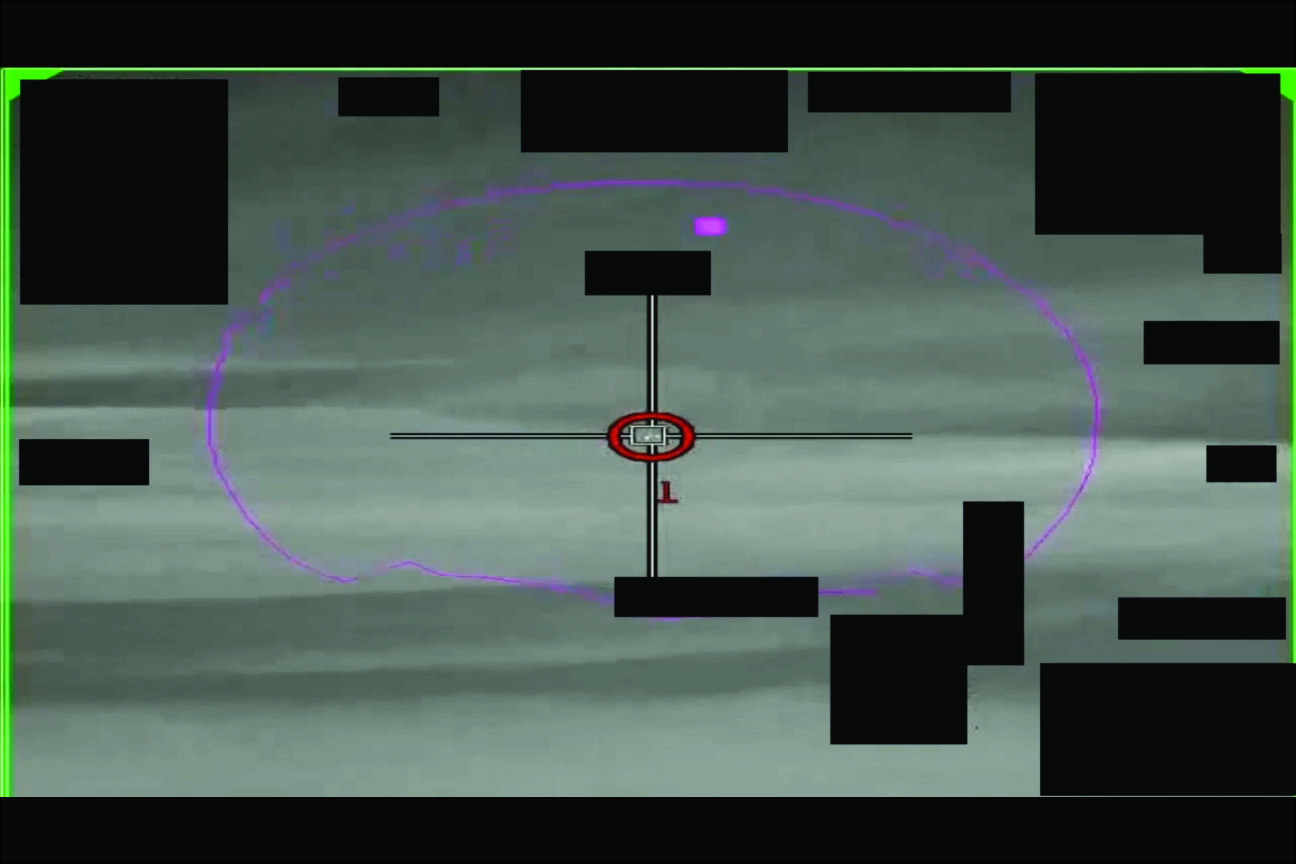
Source file: dow-uap-d64-mission-report-iran-november-2020.pdf Originating agency: Department of War / Department of Defense (USCENTCOM, MDR 26-0028) Date range: November 2, 2020 (takeoff 0608Z; landing 030250Z) Page count: 7 (all read) High-significance pages: page 5 (GENTEXT/ISR combined narrative), page 6 (first UAP observation at 2143Z + Iranian guard call at 1012Z), page 7 (second UAP observation at 2148Z, traveling northwest)
Official Blurb (from war.gov)
This document is a Mission Report (MISREP), a standardized reporting form the U.S. Military uses to record the circumstances surrounding its operations. A U.S. military operator reported observing two UAP on November 2, 2020, at 2143Z and at 2148Z. The first observation occurred at an unknown altitude. The reporter described the second UAP's direction of travel as proceeding to the northwest.
Summary
Mission Report DOW-UAP-D64 (MISREP 5039166) is an operational record from the 482nd Attack Squadron (482 ATKS), subordinate to the 432nd Air Expeditionary Wing (432 AEW) under the 609th CAOC, during a long-duration ISR sortie of more than 20 hours. The aircraft departed OKAS (Ali Al Salem, Kuwait) at 0608Z, was operated remotely via LRE/MCE, and supported U.S. Naval Forces Central Command (NAVCENT) in a mission to characterize Iranian naval vessels (IRINN and IRGCN), unmanned aircraft activity, out-of-port activity, and to establish a pattern of life across the Arabian Gulf, Strait of Hormuz, and Gulf of Oman.
During the mission, at 1012Z, the aircraft received an Iranian air-defense guard call on the Guard frequency; the crew responded with standard procedures with no mission impact. Then, approximately ninety minutes after the active ISR period began and during target-deck scans, two critical observations occurred: at 2143Z, a first UAP was recorded in the vicinity of MGRS 39RWK [redacted] at an unknown altitude, on a bearing of 080T, while the aircraft was at FL220 and 105 KIAS on heading 110T. Only five minutes later, at 2148Z, a second UAP was observed at a nearby location, traveling northwest. Both observations were made through FMV via the ANDAS4 targeting pod; the video was subsequently exploited by DGS.
Research Article
Introduction
DOW-UAP-D64 belongs to the PURSUE Initiative Release 1 series, published by the Department of War on May 8, 2026. The D series spans D1 through D75 and contains military reports of UAP observations spanning recent decades. D64 documents an incident with notable geopolitical context: the mission took place over the most sensitive airspace in the Middle East — off the Iranian coast — at a historically tense moment in U.S.-Iran relations.
November 2020 was a critical month. Approximately ten months earlier, in January 2020, Revolutionary Guard General Qasem Soleimani was killed in a U.S. strike in Baghdad. In response, Iran launched ballistic missiles at U.S. bases in Iraq (Operation Martyr Soleimani). Since then, the United States had maintained continuous ISR coverage over the Strait of Hormuz and Arabian Gulf to track movements of the Islamic Republic of Iran Navy (IRINN), the IRGC Navy (IRGCN), and Iranian UAS activity. November 2020 also coincided with the U.S. presidential transition period after the election — a period that heightened concern about Iranian "window of opportunity" actions.
This is the context in which the 482 ATKS ISR aircraft flew. The mission is classified as AREC (Armed Reconnaissance). The primary pod is ANDAS4 (AN/DAS-4, the standard targeting pod for the MQ-9 Reaper, though the exact aircraft type is redacted under 1.4a). Additional avionics: AH_GMESH_VORTEX. The airspeed (105–107 KIAS) and altitude (FL220, ~22,000 feet) are consistent with an MQ-9 profile on slow patrol above open water.
Mission Description
The aircraft departed OKAS at 0608Z. Control was transferred from LRE (Launch and Recovery Element) to MCE (Mission Control Element) at 0618Z. The remote pilot changed hands at least twice more during the mission (0939Z–0153Z, 1015Z–0112Z), reflecting the long-duration, multi-crew-shift nature of the operation.
The aircraft reached its ISR station at 1015Z. The GENTEXT/ISR section explicitly states the sub-mission: "TO CHARACTERIZE IRIN\IRGCN VESSELS, UAS ACTIVITY, ACTIVITY OUTSIDE OF PORTS, AND TO ESTABLISH PATTERN OF LIFE." This is qualitative, non-kinetic ISR — identifying, characterizing, and documenting the behavioral patterns of the Iranian Navy's two separate arms.
The mission timeline broke down as follows:
- 1015Z–1910Z: Target-deck scans in the Arabian Gulf (~9 hours).
- 1910Z–2210Z: Open-water scans for UUV (unmanned underwater vehicle) identification; none found.
- 2210Z–0113Z: Resumed target-deck scans in the Arabian Gulf.
- 0112Z: Released from tasking.
- 0250Z–0300Z: Landing and engine shutdown at OKAS.
The Iranian Guard Call at 1012Z
Before reaching the ISR station, at 1012Z, the aircraft was hailed on the Guard frequency (the international aviation emergency frequency, 121.5/243.0 MHz) by "IRANIAN AIR DEFENSE." Aircraft position at the time: 39RUN [redacted], heading 068M, FL210. The crew responded with "STANDARD RESPONSE 1," and the report notes "NO IMPACT TO THE MISSION." The designation "PROFESSSIONAL" (sic, as typed in the original document) for the tone of the call indicates a routine, non-aggressive contact rather than a threatening one. The fact that a U.S. ISR aircraft was identified and hailed by Iranian air defense during the same mission that, approximately ten hours later, recorded two UAP is a contextual data point worth retaining.
First UAP Observation — 2143Z
Nine and a half hours after the guard call, and more than eleven hours after takeoff, at 2143Z (00:43 Iranian local time — deep into the overnight hours), the aircraft was at MGRS 39RWK [redacted], heading 110T (south-southeast), FL220 (~22,000 feet), 105 KIAS — a standard MQ-9 scanning profile.
The GENTEXT is brief and factual:
"AT 2143Z, [CALLSIGN REDACTED] OBSERVED 1X UNIDENTIFIED AERIAL PHENOMENON IVO 39RWK[REDACTED], ALTITUDE UNKNOWN WITH A BEARING OF 080 T."
"IVO" (In Vicinity Of) locates the observation near MGRS 39RWK [redacted]. The bearing of 080T (nearly due east) is the direction from the aircraft to the UAP, not the UAP's direction of travel. The "Altitude Unknown" field is significant. In a maritime environment, the ANDAS4 sensor (Multi-Spectral Targeting System) can compute target altitude only when a reference surface is visible — sea surface, coastline, or another object of known elevation. The failure to determine altitude suggests either that the UAP was operating in a plane that precluded a clean geometric solution, or that tracking parameters could not be established.
The observation method was FMV — continuous video capture from the EO/IR targeting pod, a substantially more reliable evidentiary record than an unassisted human visual observation. The FMV product was exploited by DGS (Distributed Ground System) and therefore archived for further analysis.
Second UAP Observation — 2148Z
Only five minutes after the first observation, at 2148Z, the aircraft recorded a second UAP. The aircraft was at a different position within 39RWK [redacted], still heading 110T, FL220, but airspeed had increased slightly to 107 KIAS.
The GENTEXT:
"AT 2148Z, [CALLSIGN REDACTED] OBSERVED AN ADDITIONAL UAP TRAVELING NW IVO 39RWK[REDACTED]"
Several features of the second observation stand out:
-
Direction of travel (NW, northwest) — unlike the first observation, which recorded only a bearing from the aircraft to the UAP (080T), this entry records the UAP's own direction of travel. This is an operationally meaningful distinction. A northwest trajectory from the southern Arabian Gulf implies movement roughly from the Iran/Hormuz direction toward Iraq/Kuwait or toward the Iranian interior.
-
"ADDITIONAL UAP" — the phrasing is deliberate: this is a second, separate UAP, not the first UAP in motion. The separate OBS LINE designations (OBS LINE 1 and OBS LINE 2) in the military record confirm this.
-
Only five minutes elapsed between the two observations, in the same general geographic area. This is consistent with three interpretations: (a) two separate UAP operating in a coordinated fashion; (b) a single UAP moving fast enough that the aircraft lost and then reacquired it at different coordinates; or (c) two entirely independent phenomena whose co-occurrence in the same mission is coincidental.
Coordinate and Area Analysis
The MGRS code 39RWK refers to UTM zone 39R, an area that encompasses the Arabian Gulf (southern Iranian and Gulf-state coastlines), the Strait of Hormuz, and portions of the Gulf of Oman. The metadata coordinates (32.4279, 53.6880) correspond to the Iranian interior (Yazd province) and represent a country centroid rather than the precise incident location. The GENTEXT explicitly states the operating area as the "ARABIAN GULF (AG)," so the observations most likely occurred over open water in the Arabian Gulf, near Iranian coastlines, in waters where IRGCN fast boats, attack craft, and shore-based systems routinely operate.
Significance within the IRGCN Context
Iran operates two distinct naval arms in the Arabian Gulf:
-
IRINN (Islamic Republic of Iran Navy) — the regular navy, primarily responsible for the Gulf of Oman and the open Arabian Sea; operates conventional warships, Kilo-class submarines, and projects outward.
-
IRGCN (Islamic Revolutionary Guard Corps Navy) — the Revolutionary Guard's naval arm, responsible for the inner Arabian Gulf and Strait of Hormuz; operates an "asymmetric fleet" of hundreds of fast attack boats, missile craft, drones, and coastal-defense systems.
The mission was explicitly tasked against both forces. A UAP appearing in IRGCN-active waters must be assessed carefully against prosaic explanations: Iranian drones (Shahed-149/161, Kaman-12), trial missile launches from the coast, or surveillance balloons. However, the GENTEXT offered no prosaic descriptors — no fixed-wing signature, no jet exhaust, no elongated shape — and the precise use of "Unidentified Aerial Phenomenon" rather than the standard term for drones ("UAS") indicates the operator saw something that did not match a recognized pattern.
The weather entry is also notable: "(U) HAZE PRECLUDED IMINT COLLECTION." Haze reduced still-imagery quality, but the FMV feed remained functional — suggesting that visual fidelity was lower than ideal yet still sufficient to detect and distinguish two separate unidentified objects within a five-minute window.
Significance
D64 carries analytical weight on several levels.
First, it records two separate UAP observations within a single mission, five minutes apart. This pattern recurs in multiple D-series records, particularly in zones of high maritime military activity, and may suggest coordinated multi-object activity, a highly maneuvering single object, or a tendency for advanced sensors to detect anomalous phenomena in specific operational areas.
Second, the incident occurred in the most geopolitically sensitive operating area of the period. November 2020 marked the final weeks of the Trump administration and a heightened probability of U.S.-Iran friction. The presence of UAP in such a contested operational space demands careful consideration of whether the objects were Iranian experimental technology, third-party technology exploiting the standoff, or a genuinely anomalous phenomenon unconnected to the military context.
Third, the sequence of events within a single mission — Iranian guard call in the morning, followed by two UAP observations in the evening — provides AARO analysts with a complete "day in the life of an ISR mission over Iran in November 2020" that can be cross-referenced against contemporaneous SIGINT records, IRGCN vessel movements, and documented Iranian UAS activity.
Fourth, the interval between the incident (November 2, 2020) and the report's release (March 16, 2026) — more than five years — is consistent with the PURSUE Initiative Release 1 schedule and indicates the document underwent a thorough declassification review authorized by USCENTCOM Chief of Staff MG Richard A. Harrison.
Key People
All personal identifying information was redacted under FOIA exemptions 3.5c, (b)(3), 130b, and (b)(6). Preserved ranks and units:
- POC (Point of Contact): SrA (Senior Airman), 482 ATKS, 432 AEW.
- QC (Quality Control): Ctr (Contractor), 12 AF PAROC.
- Approver: TSgt (Technical Sergeant), 379 AEW, 609 CAOC (Combined Air Operations Center).
- MG Richard A. Harrison — USCENTCOM Chief of Staff; authorized declassification March 16, 2026.
Locations
- OKAS — Ali Al Salem Air Base, Kuwait (ICAO code); takeoff and landing point.
- Arabian Gulf (AG) — primary ISR operating area.
- Strait of Hormuz — narrow waterway between Iran and Oman through which approximately 30% of global oil transits.
- Gulf of Oman — open sea east of Hormuz.
- 39RWK / 39RUN — MGRS grid areas within UTM zone 39R (southern Iranian coastline).
- 609 CAOC — U.S. Combined Air Operations Center in the Middle East, at Al Udeid (Qatar).
- NAVCENT — U.S. Naval Forces Central Command, headquartered in Bahrain.
Incidents
| Incident | Date/Time | Location | Details | Pages |
|---|---|---|---|---|
| Iranian air-defense guard call | 02 NOV 20, 1012Z | 39RUN [redacted], FL210, heading 068M | "Hailed on Guard freq by Iranian Air Defense"; response: "Standard Response 1"; no mission impact | p. 6 |
| First UAP observation | 02 NOV 20, 2143Z | IVO 39RWK [redacted]; aircraft FL220, 105 KIAS, heading 110T | "1X UAP, Altitude Unknown, Bearing 080T"; method: FMV via ANDAS4 | p. 6 |
| Second UAP observation | 02 NOV 20, 2148Z | IVO 39RWK [redacted] (different coordinate); aircraft FL220, 107 KIAS, heading 110T | "Additional UAP traveling NW"; method: FMV via ANDAS4 | p. 7 |
Notable Quotes
"AT 2143Z, [REDACTED] OBSERVED 1X UNIDENTIFIED AERIAL PHENOMENON IVO 39RWK[REDACTED] ALTITUDE UNKNOWN WITH A BEARING OF 080 T." — page 6
"AT 2148Z, [REDACTED] OBSERVED AN ADDITIONAL UAP TRAVELING NW IVO 39RWK[REDACTED]" — page 7
"TO CHARACTERIZE IRIN\IRGCN VESSELS, UAS ACTIVITY, ACTIVITY OUTSIDE OF PORTS, AND TO ESTABLISH PATTERN OF LIFE." — page 5, GENTEXT/ISR
"AT 1012Z, [REDACTED] WAS HAILED ON GUARD [REDACTED] FREQ BY IRANIAN AIR DEFENSE. ORDERS GIVEN: STANDARD CALL. [REDACTED] RESPONDED WITH STANDARD RESPONSE 1. NO IMPACT TO THE MISSION." — page 6, GENTEXT/GUARDCALL
"(U) HAZE PRECLUDED IMINT COLLECTION" — page 5, WEATHER
Images
1 image - click any image to enlarge
Related Articles
- DoW/DoD · 2020-09-15
Mission Report DOW-UAP-D62: UAP Observation, Link-Loss Events, and Iranian Air-Defense Intercepts over the Strait of Hormuz, September 2020
Mission Report MISREP 4782130 from the U.S. Air Force 482 ATKS / 432 AEW documents an intense 21-hour ISR sortie over the Strait of Hormuz…
- DoW/DoD · 2020-10-01
Mission Report DOW-UAP-D63: UAP Observation in the Strait of Hormuz, October 2020
Mission Report MISREP 4871281 from the 482 ATKS / 432 AEW under USCENTCOM documents a 21-hour ISR sortie from OKAS (Ali Al Salem, Kuwait) over…
- DoW/DoD · 2020-07-16
Mission Report DOW-UAP-D65: Three UAP Observations in the Persian Gulf, July 16, 2020
USCENTCOM Mission Report Misrep 4472514 documents three separate observations of an unidentified aerial phenomenon during a single ISR sortie over the Persian Gulf, the Strait…
- DoW/DoD · 2020
Range Fouler Debrief Form — Middle East Theater, May 2020
This document is a Range Fouler Debrief Form re-reviewed for release by Brigadier General Richard A. Harrison, USCENTCOM Chief of Staff. It records a UAP…