Range Fouler Debrief Form — Japan, 31 August 2023
Source file: dow-uap-d42-range-fouler-debrief-japan-2023.pdf Originating agency: Department of Defense / DoD Modern UAP (SPEAR / AARO) Date range: 31 August 2023 (08/31/20 — year partially redacted) Page count: 1 (read in full) High-significance pages: page 1 (the entire document)
Official Blurb (from war.gov)
This document is a Range Fouler Debrief Form, a standardized reporting form the U.S. Navy uses to record the circumstances surrounding an unauthorized intrusion into controlled airspace during active military operations or training. These reports contain a narrative description of the observer’s experiences. A U.S. military operator reported observing an “object fly through the screen.” The observer described a second object surpassing the first, at a higher speed. The report describes a total of three UAP “moving amongst each other.” All descriptive and estimative language contained in this report reflects the reporter’s subjective interpretation at the time of the event. Such characterizations should not be interpreted as a conclusive indication of the presence or absence of any intrinsic object features or performance characteristics.
Summary
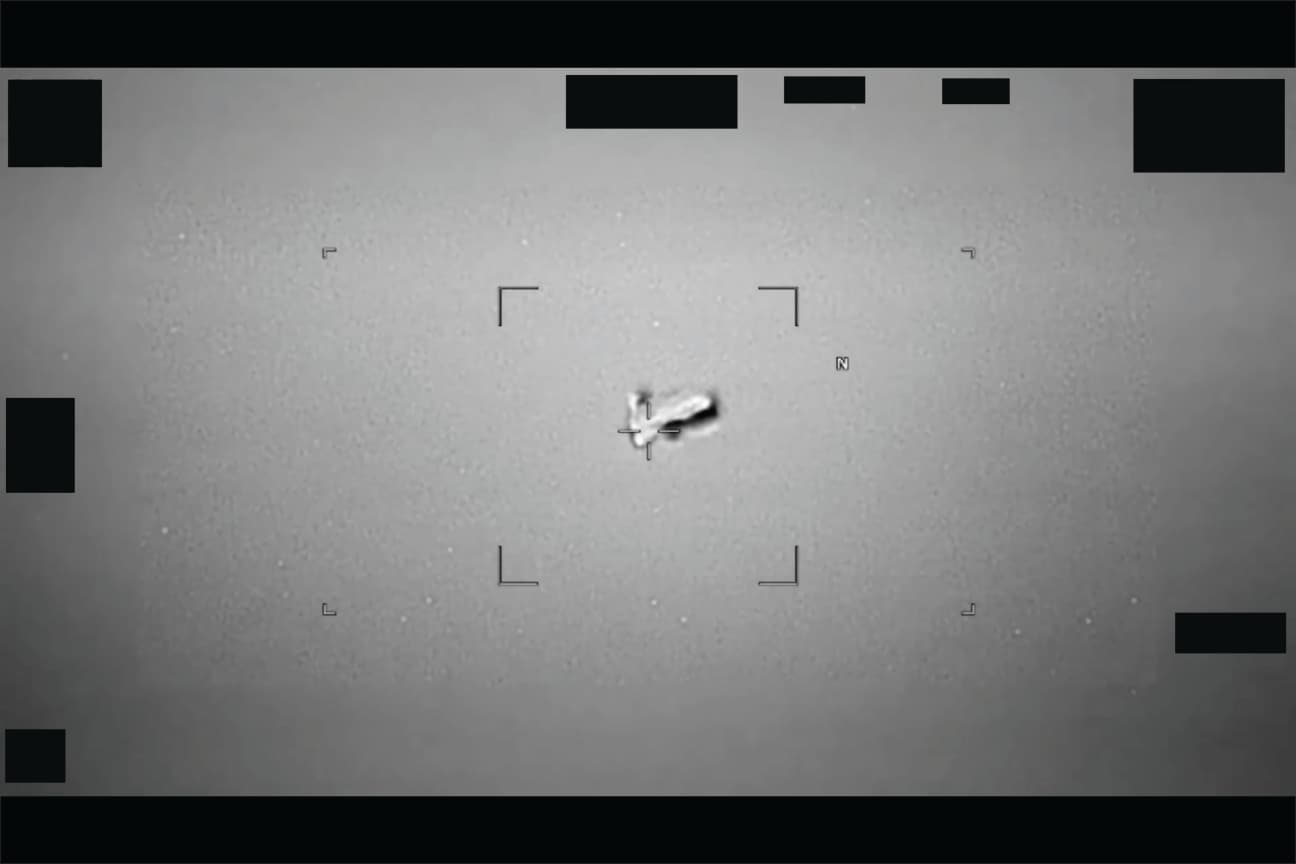
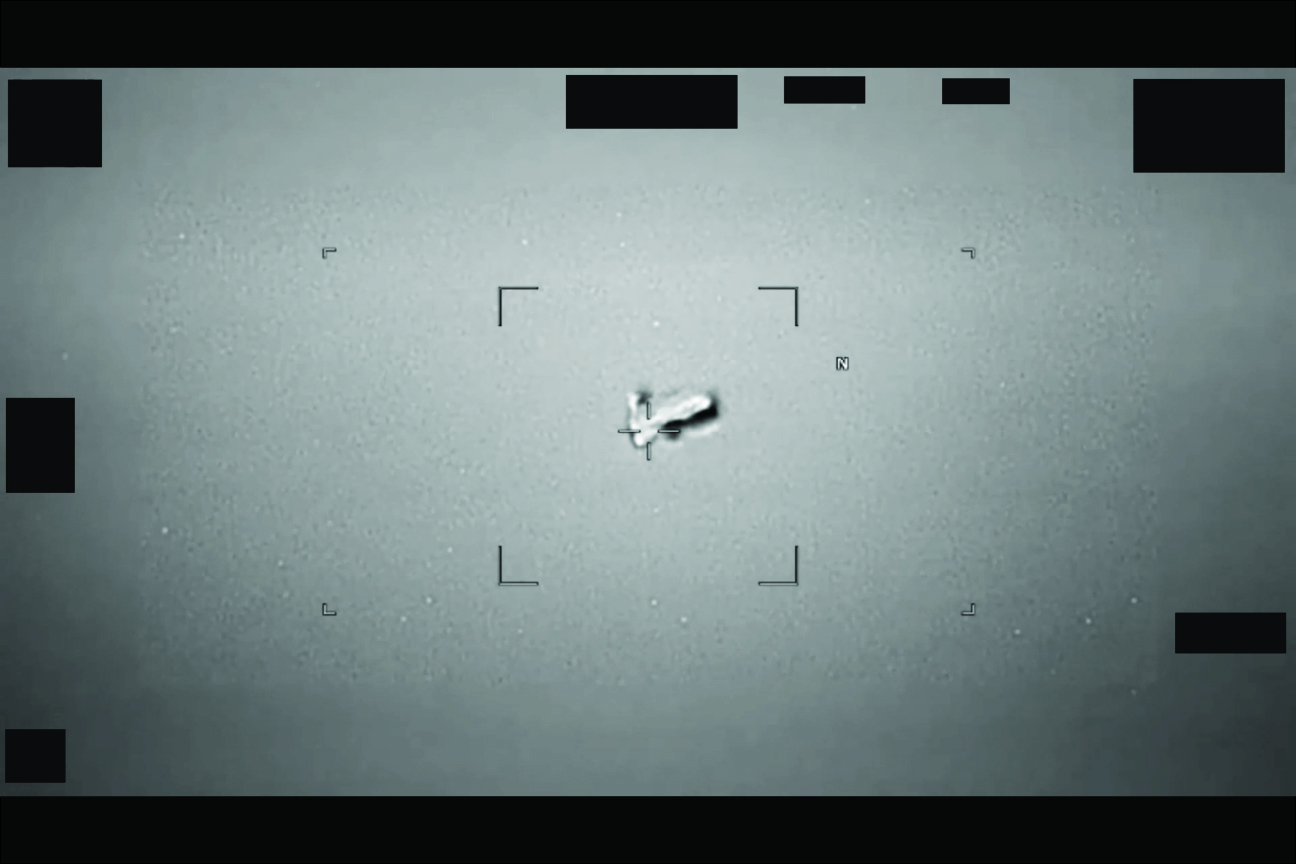
This document is a Range Fouler Debrief Form completed by a pilot holding the rank of O-2, assigned to the 482 ATKS squadron. The incident was logged at dusk on 31 August. The pilot reported the detection of an unidentified object at an altitude of 18,000 feet, traveling on a heading of 150 degrees at a speed of 230 knots. The object was subsequently joined by a second object of the same size and shape but moving at far greater speed; at the peak of the event three objects were observed simultaneously on screen, moving among one another.
Research Article
Introduction
On 31 August 2023, at dusk, an American pilot from the 482 ATKS squadron reported a significant UAP incident during an ISR (Intelligence, Surveillance, Reconnaissance) mission. The document under examination is an official debrief form submitted into SPEAR, the U.S. military's institutional reporting mechanism for range-fouler incidents. The form was released to the public on 16 March 2026 under USCENTCOM MDR 26-0028.
The "Range Fouler" Concept
A "range fouler" is a military term describing any object that enters, without authorization, a closed airspace or an active live-fire range. Military firing ranges are areas in which training operations, weapons testing, and operational sorties are conducted. Unauthorized entry into these areas endangers the safety of military activity and mandates an immediate cease-fire and debrief. When the object in question is unidentified and its behavior is inconsistent with known aircraft, vehicles, or balloons, the event is referred to the All-domain Anomaly Resolution Office (AARO), the U.S. government body chartered to investigate anomalous aerial phenomena.
Incident Details
Operational environment: The pilot was flying an ISR mission with no Large Force Exercise (LFE) designation. The object's initial geolocation was logged under MGRS code 39RWL2 (the precise grid digits are partially masked). The contact's working coordinate is classified under exemption (b)(1)1.4a, which pertains to national-security information.
Physical characteristics:
- Altitude: 18,000 feet (approximately 5,486 meters) — held constant (Altitude Constant: Yes)
- Speed and heading: 150 degrees / 230 knots (approximately 426 km/h) — a substantial speed for an object with no visible means of propulsion
- Shape: "Other Shape" — not round, not square, not balloon-shaped, no wings
- Propulsion: "Apparent Propulsion" marked positive, but no moving parts (Moving Parts: No)
- Material / appearance: not metallic, not transparent, not opaque, not reflective — all visual-appearance attributes left blank
- Markings: none (Markings: No)
Detection systems: The radar noted was of the "Other" type — i.e., not a standard radar system. No autonomous AIM-9X lock was achieved, ATFLIR Autotrack was not engaged, and no "Tally" (direct visual sighting of the object) was achieved. There were no signs of electronic attack (EA Indications: None).
The Pilot's Account
The pilot described the event in his own words:
"Saw the initial object fly through the screen and started tracking it. Initial object was surpassed by another object of same size and shape but much higher speed. At one point during tracking the objects, there were three on the screen at the same time moving amongst each other."
This account points to several critical observations:
- The first object was initially seen as a single contact and was put under track.
- A second object appeared, identical in size and shape but with significantly superior speed.
- At the peak of the event, three objects were observed simultaneously, moving in a coordinated manner among one another.
- "Moving amongst each other" implies a coordinated group dynamic.
Significance
The incident presents a series of characteristics that exceed any known platform:
Multiple coordinated objects: The appearance of three objects with coordinated motion in a closed military environment raises serious operational and safety questions. No activity by authorized unmanned aerial systems (UAS) was reported in the area.
Unexplained speed disparities: The second object, identical in dimensions to the first, moved at far greater speed. Such a speed differential between objects of similar characteristics is not explained by the physics of conventional aircraft.
Absence of identifying signatures: No transponder codes, no recognizable visual characteristics, no response to conventional radar sweep — a profile indicating a platform not operating under normal aviation procedures.
Constant-altitude behavior in a dynamic environment: Maintaining a constant 18,000-foot altitude at dusk, within an active intelligence-collection environment, implies situational awareness.
Reporting framework: The document is submitted through the SPEAR system, which guarantees full anonymity to the aircrew and squadron and is managed by AARO. This indicates the seriousness with which the military establishment treats the documentation of such incidents.
Key People
- Reporting pilot: rank O-2, 482 ATKS squadron, role: Pilot. Name redacted under SPEAR procedures.
- MG Richard A. Harrison: USCENTCOM officer who approved the document's release to the public on 16 March 2026.
Locations
- 482 ATKS squadron: an Attack Squadron, most likely based at a U.S. installation in Japan.
- Working area: classified under (b)(1)1.4a — national-security information.
- MGRS coordinate: 39RWL2 — Grid Zone 39R, which includes parts of Japan and neighboring countries in the Pacific.
Incidents
| Incident | Date | Location | Pages |
|---|---|---|---|
| UAP detection and tracking by 482 ATKS pilot: three unidentified objects, altitude 18,000 ft, speed 230 knots, no direct visual identification, of unknown origin | 31/08/2023, dusk | Classified airspace, Japan (MGRS 39RWL2) | 1 |
Notable Quotes
"Saw the initial object fly through the screen and started tracking it. Initial object was surpassed by another object of same size and shape but much higher speed. At one point during tracking the objects, there were three on the screen at the same time moving amongst each other." — page 1
This document was released under USCENTCOM MDR 26-0028, under FOUO / PA on 16 March 2026. All identifying information for the aircrew and squadron was omitted by SPEAR. This analysis is based on the single page received.
Images
1 image - click any image to enlarge
Related Articles
- DoW/DoD · 2020-07-16
Mission Report DOW-UAP-D65: Three UAP Observations in the Persian Gulf, July 16, 2020
USCENTCOM Mission Report Misrep 4472514 documents three separate observations of an unidentified aerial phenomenon during a single ISR sortie over the Persian Gulf, the Strait…
- DoW/DoD · 2020-09-15
Mission Report DOW-UAP-D62: UAP Observation, Link-Loss Events, and Iranian Air-Defense Intercepts over the Strait of Hormuz, September 2020
Mission Report MISREP 4782130 from the U.S. Air Force 482 ATKS / 432 AEW documents an intense 21-hour ISR sortie over the Strait of Hormuz…
- DoW/DoD · 2020
Range Fouler Debrief Form — Middle East Theater, May 2020
This document is a Range Fouler Debrief Form re-reviewed for release by Brigadier General Richard A. Harrison, USCENTCOM Chief of Staff. It records a UAP…
- DoW/DoD · 2020
Mission Report: Formation of Unknown Flying Objects over the Persian Gulf, August 2020
MISREP number 4685903, filed by the 482 ATKS unit of the 432 AEW under USCENTCOM, documents a 21-hour ISR/SIGINT sortie over the Arabian Gulf, Strait…