Range Fouler Reporting Form — Gulf of Aden, October 2020
Source file: dow-uap-d44-range-fouler-arabian-sea-october-2020.pdf Originating agency: Department of Defense / DoD Modern UAP Date range: 15 October 2020 Page count: 1 (read in full) High-significance pages: 1
Official Blurb (from war.gov)
This document is a Range Fouler Reporting Form, a standardized reporting form the U.S. Navy uses to record the circumstances surrounding an unauthorized intrusion into controlled airspace during active military operations or training. These reports contain a narrative description of the observer’s experiences. A U.S. military operator reported observing a “round, cold object” via infrared sensor, traveling at 319 degrees (northwest) at approximately 20 mph. The report describes the UAP making “abrupt directional changes” during the event. All descriptive and estimative language contained in this report reflects the reporter’s subjective interpretation at the time of the event. Such characterizations should not be interpreted as a conclusive indication of the presence or absence of any intrinsic object features or performance characteristics.
Summary
On 15 October 2020, at 14:18:39 Zulu, a pilot holding the rank of O-2 from the 172 ATKS squadron detected and tracked a round, cold infrared object over the Gulf of Aden, traveling on a heading of 319 degrees at 20 mph. The object made several abrupt directional changes during the one-minute contact and exhibited no signs of propulsion, no moving parts, and no exhaust trail. The report was submitted to the SPEAR program and subsequently approved for release to AARO.
Research Article
Introduction
Document DOW-UAP-D-44 is a Range Fouler Reporting Form completed by a pilot holding the rank of O-2, assigned to the 172 ATKS squadron. The event was logged on 15 October 2020 at 14:18:39 Zulu, and its location is over the Gulf of Aden, in the northern Indian Ocean region. The document was declassified by Major General Richard A. Harrison (MG Richard A. Harrison) and approved for release to the All-domain Anomaly Resolution Office (AARO) on 27 March 2026, as part of USCENTCOM's MDR document set.
Identification and Physical Description of the Object
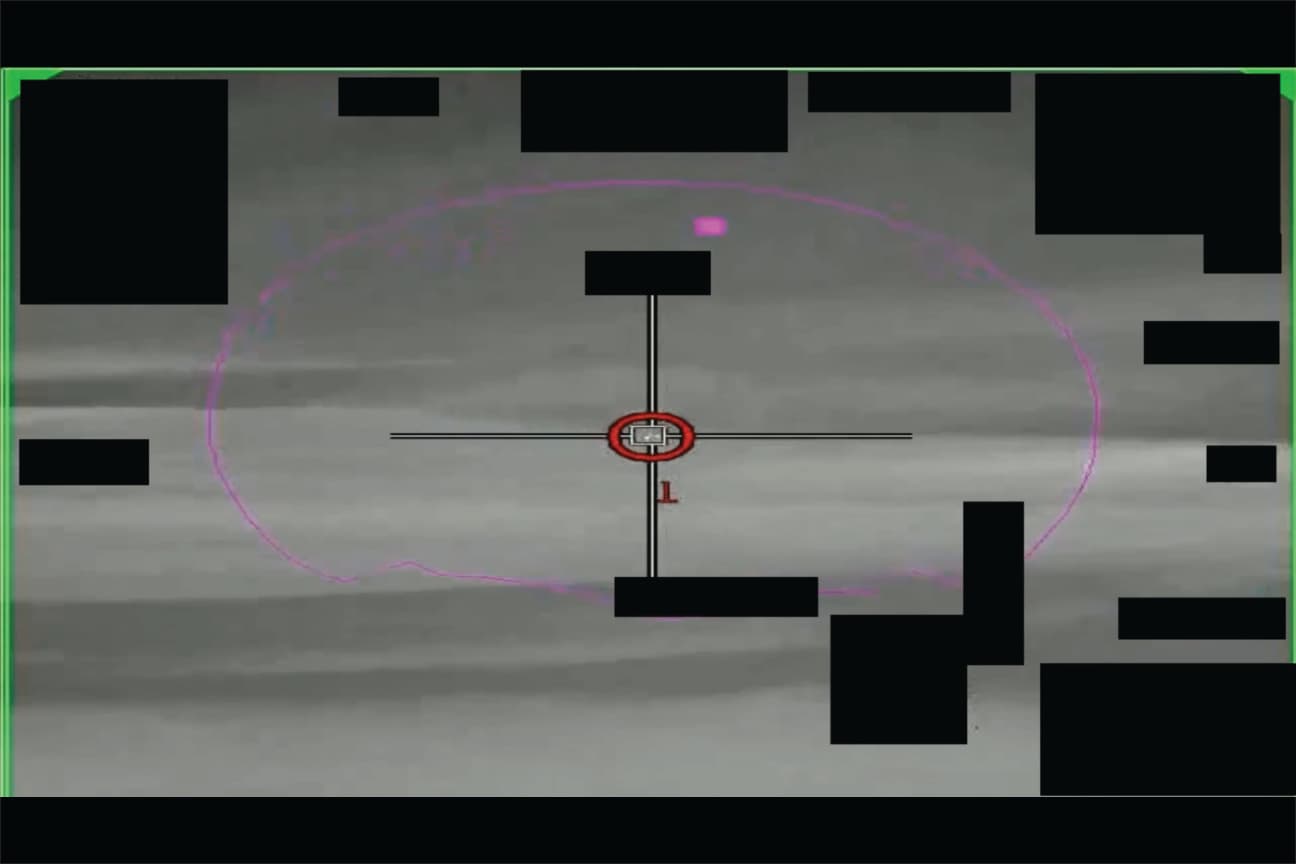
The object was logged between 14:18:39 and 14:19:52 Zulu — a total contact duration of approximately 73 seconds. The geographic version of the contact location is MGRS 40Q BD 63 (the remaining data is redacted). The report notes that the crew tracked a "round" object — this was the only marker selected from a list of possible shapes including square, balloon-shaped, wings/frame, and others. Fields such as "moving parts," "metallic," "markings," "transparent," "opaque," and "reflective" were left blank, meaning those characteristics were not identified.
The most technically striking data point is that "Apparent Propulsion" was not marked — i.e., no method of propulsion was observed. Likewise, "EA Indications" — indications of electronic warfare (ECM, Letter Identifier, False Trackfiles, Other/Ambiguous) — were not marked, meaning the object did not interfere with electronic sensors.
Sensor and Detection Details
The sortie was flown as an ISR (Intelligence, Surveillance, Reconnaissance) mission during daytime. The equipment carried aboard included:
- Radar: noted as equipped (Radar Equipped)
- Missile: AIM-9X
- ATFLIR sensor: (Advanced Targeting Forward-Looking Infrared) — Autotrack
- Self-Track: not engaged
It is important to note that "Stable Trackfile" and "Tally Achieved" were not marked, meaning no full visual lock was obtained and no stable track was established in the system. Nevertheless, the ATFLIR sensor was able to follow the object automatically. The number of contacts in the group was 1 — a single object.
The Pilot's Account of the Event
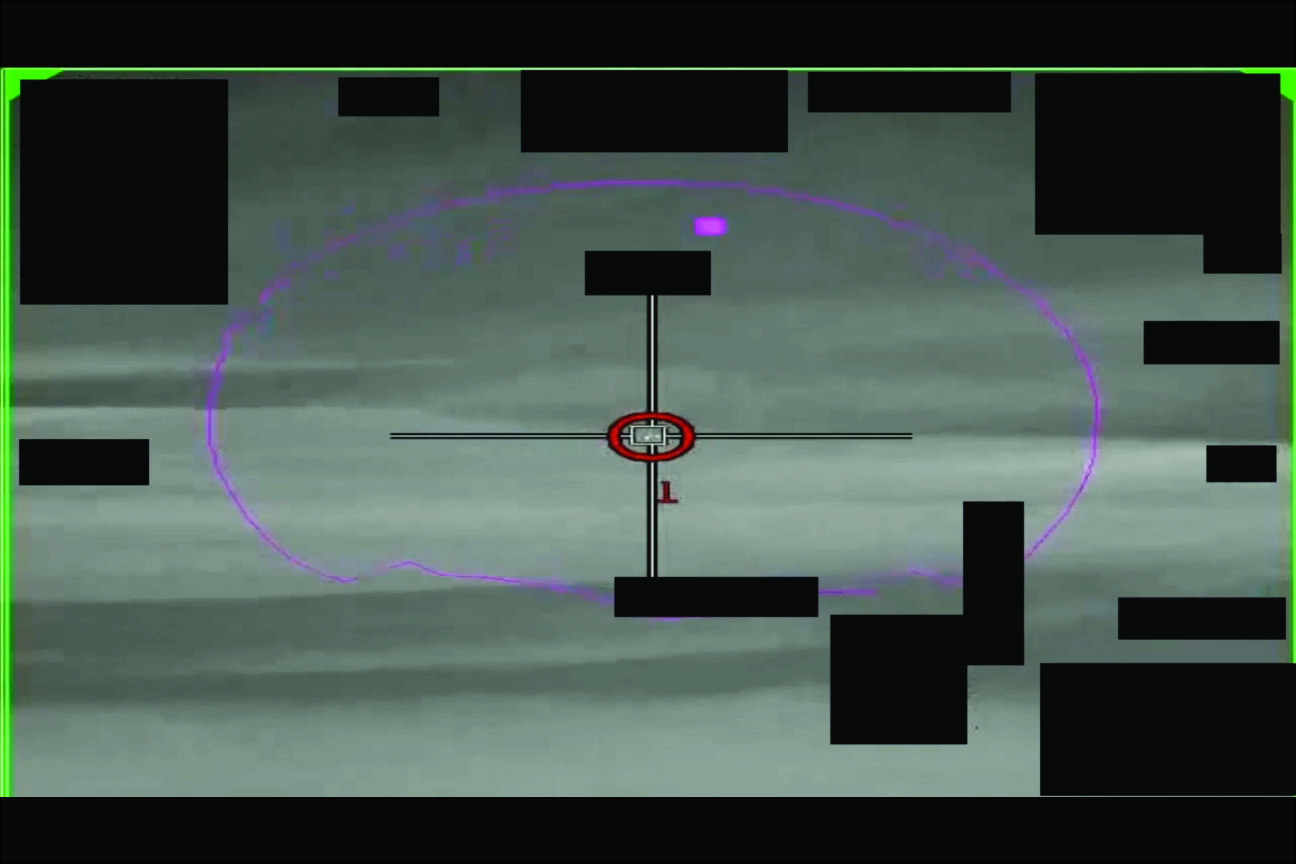
The pilot described: "While at 19,073 HAT over the Gulf of Aden we tracked a round, cold object in IR traveling 319 degrees at 20 mph. It made a few abrupt directional changes during the 1 minute contact. Our sensor was aimed -50 degrees below our altitude with a slant range of 4.06NM and ground range of 4.78KM. The IR sensor was set to black hot and the object in question was a bright white."
The Black Hot / bright-white data are critical: when the IR sensor is set to "Black Hot," hot objects appear dark and cold objects appear bright. The fact that the object appeared "bright white" indicates that its temperature was lower than the surrounding environment — i.e., it was relatively cold compared to the surrounding air. This rules out hot engines, gas emissions, or any significant heat source. This analysis is consistent with the absence of any propulsion signature.
Analysis of Motion Data
- Direction of travel: 319 degrees (north-northwest)
- Speed: 30 knots (Direction/Speed: 261/30 per the form field) and 20 mph per the pilot's account — possibly two distinct measurements or a change in speed
- Contact altitude: not explicitly stated
- Sensor position: -50 degrees below the aircraft's altitude
- Slant range: 4.06 nautical miles (approximately 7.5 km)
- Ground range: 4.78 km
- Directional changes: "a few abrupt directional changes"
The "Altitude Constant?" field was left blank, but "Was the contact moving?" was marked Yes. The abrupt directional changes are among the most prominent characteristics documented in other UAP incidents from this period (2019–2020) and serve as a central argument that this is not known commercial or military flight equipment.
Significance of the Document
This document is part of a series of reports on "Range Foulers" — objects that intruded into restricted military training areas. It confirms a recurring pattern in the Arabian Sea and Gulf of Aden region in 2020: small, round, infrared-cold objects moving at relatively low speed, with no evidence of propulsion, capable of executing sharp turns. The SPEAR program collected this data and ensured the sanitization of identifying information before its analysis.
Key People
- MG Richard A. Harrison — declassified the document
- O-2 pilot, 172 ATKS squadron — the reporting officer (identifying information removed by SPEAR)
Locations
- Gulf of Aden — location of the event
- MGRS 40Q BD 63 — coordinates (partial, the remainder redacted)
- Arabian Sea / USCENTCOM AOR — the overall area of responsibility
Incidents
| Incident | Date | Location | Pages |
|---|---|---|---|
| Round, IR-cold object, abrupt directional changes, no propulsion | 15 October 2020, 14:18–14:19 Zulu | Gulf of Aden | 1 |
Notable Quotes
"While at 19,073 HAT over the Gulf of Aden we tracked a round, cold object in IR traveling 319 degrees at 20 mph. It made a few abrupt directional changes during the 1 minute contact." — page 1
"The IR sensor was set to black hot and the object in question was a bright white." — page 1
"Our sensor was aimed -50 degrees below our altitude with a slant range of 4.06NM and ground range of 4.78KM." — page 1
Images
1 image - click any image to enlarge
Related Articles
- DoW/DoD · 2024-07-14
Mission Report DOW-UAP-D75: Fast-Moving UAP over the Gulf of Aden, July 2024
Mission Report DOW-UAP-D75 (Misrep 10194673) documents a single UAP observation by a U.S. military operator on July 14, 2024 at 0517Z over the Gulf of…
- DoW/DoD · 2020
Range Fouler Debrief Form: Unidentified Air Contacts over the Arabian Sea, August 2020
On August 24, 2020, at 0004:30Z, an O-3 grade aviator from HSM-73 documented three small unidentified air contacts over the North Arabian Sea. All three…
- DoW/DoD · 2023
AARO Unresolved Case Analysis Update: The Western U.S. "Orbs Launching Orbs" Event, 2023
A signed All-domain Anomaly Resolution Office (AARO) Memorandum for Record, dated 05 June 2026 and signed by Director Jon T. Kosloski, summarizing the agency's ongoing…
- DoW/DoD · 2022
Unresolved UAP Report DOW-UAP-PR20: Digitally Annotated Still Image, Kuwait, May 2022
An Unresolved UAP Report (PR series) submitted by USCENTCOM to AARO, consisting of a single still image captured by a U.S. military sensor system in…