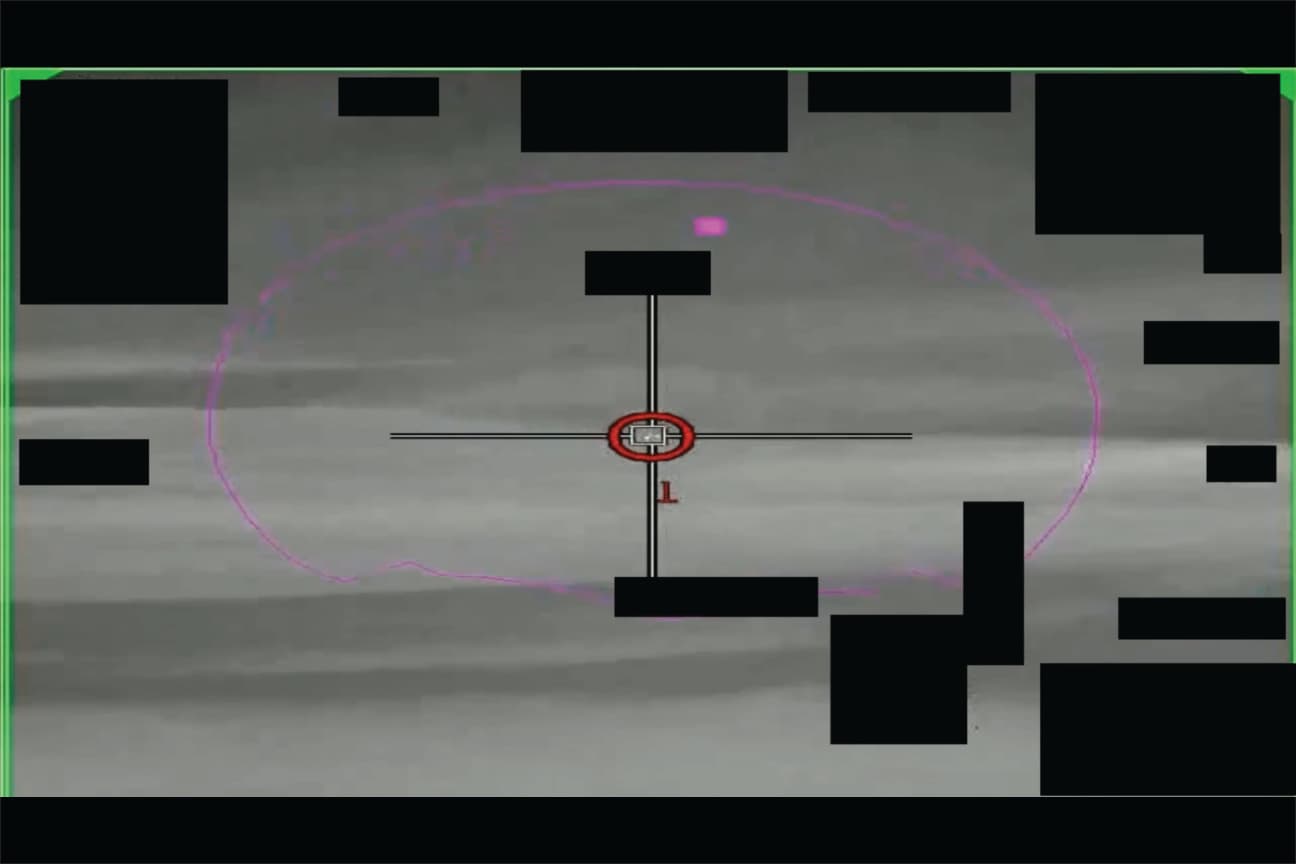
Range Fouler Debrief Form: Unidentified Air Contacts over the Arabian Sea, August 2020
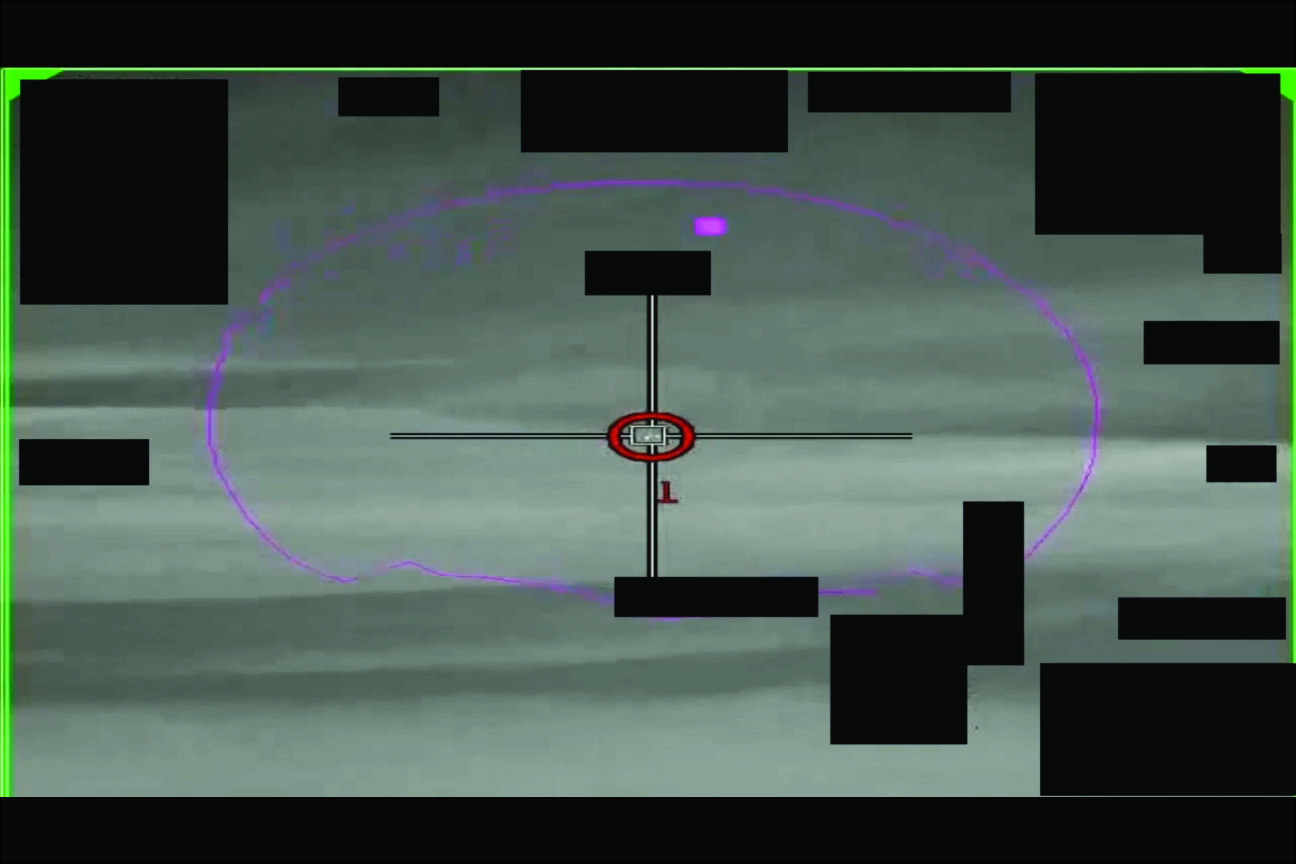
Source file: dow-uap-d56-range-fouler-debrief-arabian-sea-august-2020.pdf Originating agency: Department of Defense / DoD Modern UAP Date range: August 24, 2020 Page count: 1 (read in full) High-significance pages: 1
Official Blurb (from war.gov)
This document is a Range Fouler Debrief Form, a standardized reporting form the U.S. Navy uses to record the circumstances surrounding an unauthorized intrusion into controlled airspace during active military operations or training. These reports contain a narrative description of the observer's experiences. A U.S. military operator reported an encounter with a group of three "unidentified small air contacts" over the North Arabian Sea. The reporter described the UAP as having "wings/airframe" structure, and as initially bearing on a westerly heading. The operator tracked one UAP before losing sight of it behind a cloud. Upon regaining contact, the operator reported observing two additional UAP to the east of the first. The report states that all three objects then "appeared to maintain their relative course, speed, and altitude." All descriptive and estimative language contained in this report reflects the reporter's subjective interpretation at the time of the event. Such characterizations should not be interpreted as a conclusive indication of the presence or absence of any intrinsic object features or performance characteristics.
Summary
On August 24, 2020, at 0004:30Z, an O-3 grade aviator from HSM-73 documented three small unidentified air contacts in the North Arabian Sea. All three contacts maintained a consistent relative course, speed, and altitude throughout the interaction, even though no stable radar lock was achieved on any of them. After one contact disappeared behind a cloud, two additional contacts were reacquired to the east of the original position. The report was submitted through the SPEAR program and cleared for release to AARO.
Research Article
Introduction
Document DOW-UAP-D56 is a Range Fouler Debrief Form completed by an O-3 grade aviator from HSM-73. The event occurred on August 24, 2020, at 0004:30Z — during the early morning hours, in darkness. The encounter took place over the North Arabian Sea at approximate coordinates 21440N / 21440E (the remainder redacted). The document was declassified by Major General Richard A. Harrison and cleared for release to AARO on March 27, 2026, as part of the USCENTCOM MDR package covering documents MDR 26-0038 through 26-0046.
Physical description of the objects
The report documents three unidentified air contacts (3 contacts in group). Of the physical characteristics options provided on the form, only two were checked: Round and Wings/Airframe. Fields for square, balloon-like, moving parts, metallic, markings, transparent, opaque, and reflective were left blank. The "Apparent Propulsion" field was not checked, meaning no propulsion method was observed on any of the contacts.
The EA Indications fields — covering ECM Arc, Letter Identifier, False Trackfiles, and Other/Ambiguous — were left completely blank. This means the contacts did not interfere with electronic sensors and employed no electronic countermeasures.
Sensor and tracking details
Equipment available during the mission included radar (Radar Equipped: Other) and an AIM-9x missile. The ATFLIR Autotrack and Self-Track fields were not selected, meaning automatic IR tracking was not initiated. "Stable Trackfile" was recorded as No, and "Tally Achieved" was not checked. In practice, this means neither a visual lock nor a stable radar track file was established in the aircraft's systems. The radar produced no stable track, and there was no ES (Electronic Support) or IFF (Identification Friend or Foe) signal — both explicitly noted in the pilot's narrative.
The mission was designated SSC (likely Support to Surface Combat or equivalent). The LFE (Large Force Exercise) field was marked No, confirming this was not a scheduled large-force training event.
Movement data and environmental conditions
Contact movement data recorded on the form:
- Direction of travel: 270 degrees (west)
- Speed: Unknown (UNK)
- Contact altitude: 1.4a (redacted)
- Altitude constant: Yes
- Range to contact: Unknown
- Wind direction: 310 degrees
- Wind speed: 5 knots
- Time of event: Night
- Number of contacts in group: 3
The fact that altitude remained constant throughout the interaction — combined with a steady westerly heading and unknown speed — limits kinematic analysis. Nevertheless, three separate objects maintaining identical relative course and altitude without any apparent propulsion is an operationally unusual observation.
The encounter in the aviator's own words
The aviator wrote in the free-narrative section of the form: "observed 3x possible unidentified small air contacts while conducting routine operations in the North Arabian Sea. Negative ES, radar track, and IFF track. Distance to contact was unknown. Speed of contact was unknown. Precise course of contact was unknown, but appeared to be on a westerly heading. No interaction took place between [redacted] and the unknown air contacts. Initially observed 1x unknown air contact and tracked it before losing sight as it went behind a cloud. When contact on the unknown air contact was regained, 2x additional unknown air contacts were seen due east of the location of the initial contact. All 3x unknown air contacts appeared to maintain their relative course, speed, and altitude."
This account reveals several important points. First, the aviator initially tracked a single contact, then lost it behind a cloud; when it was reacquired, two additional contacts had appeared to the east of the original position. Second, all three maintained consistent relative course, speed, and altitude throughout. Third, no interaction of any kind occurred between the aircraft and the unidentified contacts.
Analysis and significance
Several characteristics of this incident merit particular attention.
Multiple contacts maintaining formation. Three independent contacts that preserve the same course, speed, and altitude relative to one another carry significant operational weight. Coordinated behavior of this kind — without any detectable communication and without IFF — points toward an organized system of some description.
Disappearance behind a cloud and positional shift. When the initial contact was reacquired after passing behind a cloud, two additional contacts had appeared to the east. This sequence could be interpreted as a formation reconfiguration during a period of visual obscuration.
Absence of electronic and acoustic signatures. The explicit negatives for ES, radar track, and IFF leave the contacts without any known electronic identifier. The combination of objects with apparent physical form — the "round" and "wings/airframe" designations — and a complete absence of electronic signatures is a recurring characteristic in UAP encounters documented by AARO.
Time and location. The event occurred during the overnight hours (0004:30Z) over the North Arabian Sea, a region of high operational significance due to its proximity to strategic sea lanes and active USCENTCOM operational zones.
Relationship to other area incidents
The Arabian Sea and Gulf of Aden continued to appear as UAP incident focal points throughout 2020. Documents DOW-UAP-D44 and DOW-UAP-D57, also from this period, present similar patterns: small objects, no electronic signatures, in USCENTCOM training and operational areas. This incident (D56) stands out for the number of simultaneous contacts — three in parallel — and for the "disappearance and repositioning" behavior observed during the cloud occlusion phase.
Key People
- MG Richard A. Harrison — removed classification from this document
- O-3 aviator, HSM-73 — report author (identifying information removed by SPEAR)
Locations
- North Arabian Sea — location of the encounter
- Coordinates 21440N / 21440E (partial; remainder redacted)
- USCENTCOM AOR — overarching area of responsibility
Incidents
| Incident | Date | Location | Pages |
|---|---|---|---|
| Three unidentified small air contacts; no ES/radar/IFF; formation maintained; contact lost behind cloud | August 24, 2020, 0004:30Z | North Arabian Sea | 1 |
Notable Quotes
"observed 3x possible unidentified small air contacts while conducting routine operations in the North Arabian Sea. Negative ES, radar track, and IFF track." — page 1
"Initially observed 1x unknown air contact and tracked it before losing sight as it went behind a cloud. When contact on the unknown air contact was regained, 2x additional unknown air contacts were seen due east of the location of the initial contact." — page 1
"All 3x unknown air contacts appeared to maintain their relative course, speed, and altitude." — page 1
Images
1 image - click any image to enlarge
Related Articles
- DoW/DoD · 2024-07-14
Mission Report DOW-UAP-D75: Fast-Moving UAP over the Gulf of Aden, July 2024
Mission Report DOW-UAP-D75 (Misrep 10194673) documents a single UAP observation by a U.S. military operator on July 14, 2024 at 0517Z over the Gulf of…
- DoW/DoD · 2020
Range Fouler Reporting Form — Gulf of Aden, October 2020
On 15 October 2020, at 14:18:39 Zulu, an O-2 pilot of the 172 ATKS squadron detected and tracked a round, cold infrared object over the…
- DoW/DoD · 2023
AARO Unresolved Case Analysis Update: The Western U.S. "Orbs Launching Orbs" Event, 2023
A signed All-domain Anomaly Resolution Office (AARO) Memorandum for Record, dated 05 June 2026 and signed by Director Jon T. Kosloski, summarizing the agency's ongoing…
- DoW/DoD · 2022
Unresolved UAP Report DOW-UAP-PR20: Digitally Annotated Still Image, Kuwait, May 2022
An Unresolved UAP Report (PR series) submitted by USCENTCOM to AARO, consisting of a single still image captured by a U.S. military sensor system in…