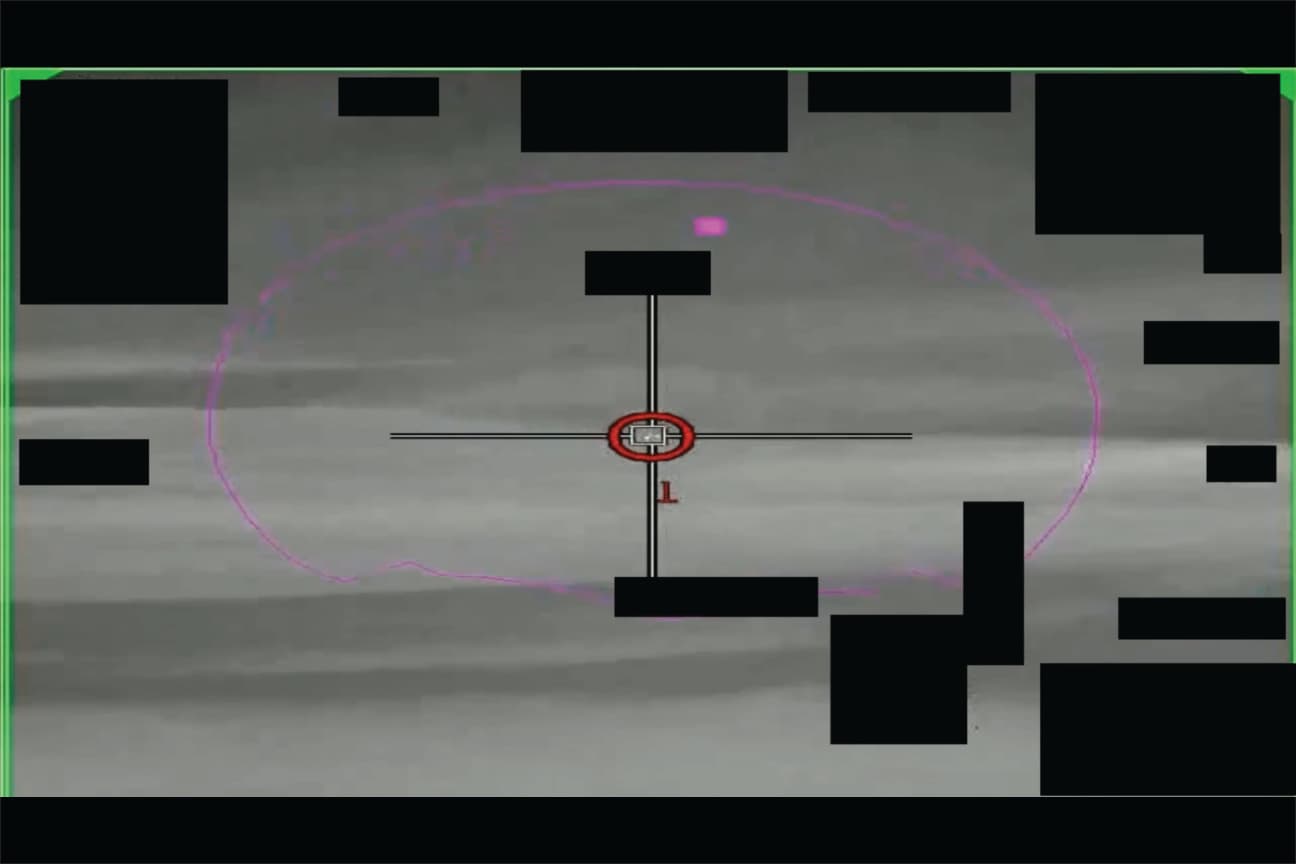
Mission Report DOW-UAP-D5: UAP Observations in the Arabian Gulf, 2020
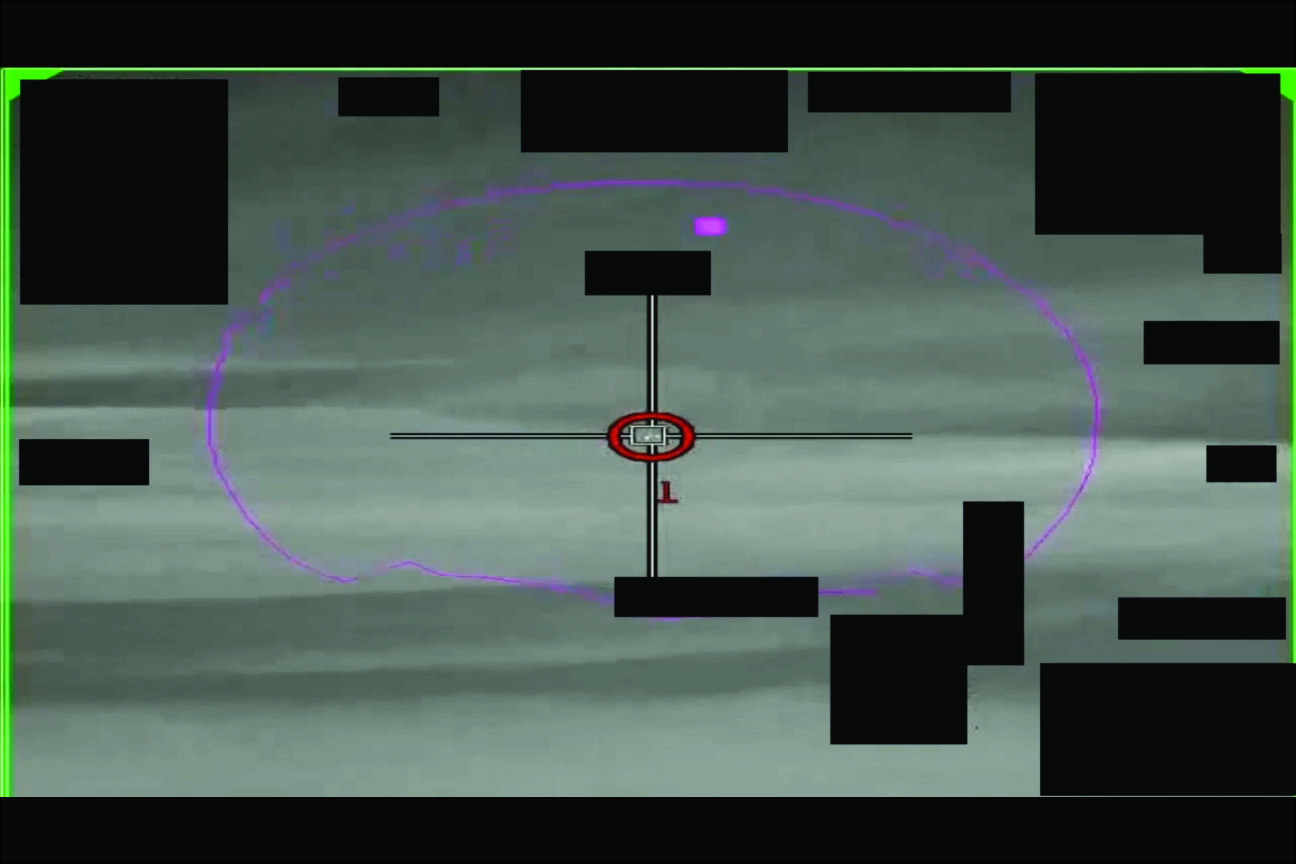
Source file: dow-uap-d5-mission-report-arabian-gulf-2020.pdf Originating agency: Department of Defense / DoD Modern UAP Date range: 2020 Page count: 6 (all read) High-significance pages: Page 5, Page 6
Official Blurb (from war.gov)
This document is a Mission Report (MISREP), a standardized reporting form the U.S. Military uses to record the circumstances surrounding its operations. U.S. military services often use MISREPs to report Unidentified Anomalous Phenomena (UAP) to AARO. The GENTEXT, or "general text" section of these reports often contains important qualitative, contextual information, distinguishing it from the more quantitative, or numerical, data found elsewhere in the report. A U.S. military operator reported observing two UAP traveling at an estimated speed of 278 knots (320 mph). The observer reported that the UAP "increased speed and changed direction towards the south." All descriptive and estimative language contained in this report reflects the reporter's subjective interpretation at the time of the event. Such characterizations should not be interpreted as a conclusive indication of the presence or absence of any intrinsic object features or performance characteristics.
Summary
This is a classified U.S. Department of Defense Mission Report (DOW-UAP-D5) recording UAP observations during 2020 operations in the Arabian Gulf. All six pages bear massive redactions under FOIA exemption 1.4(a), which protects information related to military capabilities and national programs. Two readable text passages survived the censorship and provide concrete operational data on two separate UAP incidents.
Research Article
Introduction
During 2020, as routine U.S. military operations continued across the Arabian Gulf, American forces in the region logged multiple observations of unidentified aerial phenomena. Mission Report DOW-UAP-D5 is a formal U.S. government document released through a Freedom of Information Act (FOIA) process. It was prepared by an operational entity within the U.S. defense establishment and reports on at least two UAP incidents documented in real time by forces in the field.
The document comprises six pages, four of which are entirely redacted under the 1.4(a) FOIA classification, which concerns the protection of national-security information related to military capabilities and operational methods. This classification represents one of the highest levels of legal protection available, indicating that the material behind the redactions likely includes details about sensor systems, collection methodologies, strategic locations, and operational constraints.
Document Structure and Classification Level
The textual format of the readable passages is identified as "GENTEXT/UAP," indicating a standard U.S. Navy military-communication template for reporting UAP incidents. This format includes defined fields for description, time, location, and performance data. It points to operational reports sent in real time from a unit in the field to command and analysis elements.
The classification marking (S/REL), partially redacted in the header of each description, indicates "SECRET/RELEASABLE" — classified information shareable with defined allied nations, presumably Five Eyes partners or NATO member states. This fact underscores the regional strategic relevance of the reports.
Key Incidents
Two readable text passages in the document describe separate UAP incidents.
First incident (page 5): On an unknown day in 2020, at 13:54 Zulu, an operational officer whose identity is redacted under exemption 1.4(a) documented an observation of a single UAP at geographic coordinate 34SCE7566990098. The object's speed was measured at 40 knots (approximately 74 km/h) at an altitude between FL160 and FL170 (roughly 16,000 to 17,000 feet above sea level, or 4,900–5,200 meters). The most notable finding: the UAP's speed remained constant throughout the observation period, with altitude maintained as well. This characteristic points to stable, precise flight control.
Second incident (page 6): At 22:43 Zulu, a different officer (identity redacted) documented two possible UAPs at geographic coordinate 35TQK1580995057. Their speed was estimated at 278 knots (approximately 515 km/h). Unlike the first incident, this one involved a marked acceleration and a course change toward the south. This maneuvering behavior — a rapid change in both speed and direction — is anomalous and inconsistent with most known commercial or military aircraft.
Technical Analysis of the Readable Findings
An analysis of the available technical data yields several observations. First, the enormous speed differential between the two incidents (40 knots versus 278 knots) suggests the document describes at least two distinct types of objects, or a single object capable of dramatic acceleration. Second, the fact that the first UAP maintained a precisely constant speed — constant enough for the observer to note it explicitly — implies an absence of the emission signatures characteristic of conventional powered aircraft (engine noise changes, exhaust plumes, and the like). Third, both reports include military grid (MGRS) coordinates, indicating the objects were tracked with precision by navigation systems or radar sensors.
Strategic Significance of the Region
The Arabian Gulf is one of the most operationally active zones in the world. In 2020 the area hosted assets of the U.S. Fifth Fleet, coalition forces, and numerous reconnaissance and combat aircraft. UAP observations in an operational environment this saturated with sensors are difficult to dismiss as simple radar errors. Objects observed at the noted altitudes and speeds, in proximity to U.S. military assets, represent a factor with potential consequences for operational readiness and flight safety.
The Redactions and Their Implications
The level of censorship in this document is exceptional even by comparison with other released UAP records. Four of six pages are entirely blacked out, concealing almost certainly: force identification details (ships, aircraft, units), sensor and collection methods (SIGINT, MASINT, ELINT), analytical assessments and mission conclusions, and details of any follow-on actions taken.
A six-page document with four fully redacted pages indicates that the concealed material concerns special programs, methods, and sources whose exposure could damage U.S. operational capabilities.
Significance
Document DOW-UAP-D5 is official evidence that U.S. forces in an active operational environment in the Arabian Gulf in 2020 encountered aerial objects whose behavior exceeded the known norm. The reports follow a rigorous military documentation protocol, which removes doubt about the credibility of the source. In the absence of an alternative explanation, the readable findings support the position that concentrated UAP activity is not confined to U.S. coastal waters but occurs in strategically significant regions worldwide.
Key People
All names of authors, reporters, and analysts are redacted under exemption 1.4(a). The identities of the officers who documented both incidents are unknown.
Locations
- Arabian Gulf — general area of operations
- 34SCE7566990098 — MGRS coordinate for the first incident (FL160–FL170)
- 35TQK1580995057 — MGRS coordinate for the second incident
- South — direction of UAP movement during the second incident
Incidents
| Incident | Time (Zulu) | Location (MGRS) | Description | Pages |
|---|---|---|---|---|
| Single UAP, constant speed | 1354Z | 34SCE7566990098, FL160–170 | 1x UAP, 40 knots, speed remained constant | 5 |
| Two possible UAPs, acceleration southward | 2243Z | 35TQK1580995057 | 2x POSS UAPS, 278 knots, changed direction south | 6 |
Notable Quotes
From page 5 (the only readable text):
"AT 1354Z, [REDACTED] OBSERVED 1X UAP IVO 34SCE7566990098. VELOCITY WAS 40 KNOTS AT FL160 TO FL170. UAP SPEED REMAINED CONSTANT."
From page 6 (the only readable text):
"AT 2243Z, [REDACTED] OBSERVED 2X POSS UAPS IVO 35TQK1580995057. VELOCITY WAS ESTIMATED AT 278 KNOTS. UAPS INCREASED SPEED AND CHANGED DIRECTION TOWARDS THE SOUTH."
This article is based solely on analysis of the readable portions of the document. The majority of the document's content is redacted under classification 1.4(a) and is not available to the public.
Images
1 image - click any image to enlarge
Related Articles
- DoW/DoD · 2020-07-16
Mission Report DOW-UAP-D65: Three UAP Observations in the Persian Gulf, July 16, 2020
USCENTCOM Mission Report Misrep 4472514 documents three separate observations of an unidentified aerial phenomenon during a single ISR sortie over the Persian Gulf, the Strait…
- DoW/DoD · 2020-09-15
Mission Report DOW-UAP-D62: UAP Observation, Link-Loss Events, and Iranian Air-Defense Intercepts over the Strait of Hormuz, September 2020
Mission Report MISREP 4782130 from the U.S. Air Force 482 ATKS / 432 AEW documents an intense 21-hour ISR sortie over the Strait of Hormuz…
- DoW/DoD · 2024
UAP Mission Report: Greece, January 2024 — The Diamond-Mass Incident at FL200
A classified MISREP mission report, released on October 24, 2025 by Major General Richard A. Harrison, USCENTCOM Chief of Staff, documents a UAP observed on…
- DoW/DoD · 1947
Military Mission Report: Triangular Metallic UAP Observed over the Mediterranean Sea
A heavily redacted classified Mission Report (MISREP) documents a UAP encounter over the Mediterranean Sea in which a U.S. military pilot observed a single triangular…