INDOPACOM Email Correspondence on UAP Disclosure Approval — April 2025
Source file: dow-uap-d50-email-correspondence-indopacom-april-2025.pdf Originating agency: Department of Defense / INDOPACOM / Office of the Undersecretary of Defense for Intelligence and Security Date range: April 10–11, 2025 Page count: 2 (all read) High-significance pages: 1, 2
Official Blurb (from war.gov)
This document is email correspondence describing the content of a mission report and requesting clarification on its content. All descriptive and estimative language contained in this report reflects the reporter's subjective interpretation at the time of the event. Such characterizations should not be interpreted as a conclusive indication of the presence or absence of any intrinsic object features or performance characteristics.
Summary
This document is a two-page internal classified email (SECRET//NOFORN) that has undergone a public disclosure process. It records two observations of possible unidentified aerial phenomena (UAP) by U.S. aircraft within the INDOPACOM area of responsibility on April 10 and 11, 2025. The email records a bureaucratic step in which an analyst from 12 AF / DET 3 contacted an information disclosure analyst at the Office of the Undersecretary of Defense for Intelligence and Security to confirm which tearlines were approved for public release at the unclassified level.
Research Article
Introduction
In April 2025, within a documented framework of UAP information-disclosure mechanisms, an email exchange took place between two officials inside the U.S. national security apparatus. The email, originally classified SECRET//NOFORN — meaning "secret, not releasable to foreign nationals" — was released to the public following a review process. The senders' and recipients' names were redacted to protect personal privacy under FOIA exemption (b)(6), and the identities of the aircraft involved were concealed under Executive Order 13526 section 1.4(a) concerning classified national-security information.
The Disclosure Approval Process
The correspondence reveals an intermediate step in the bureaucratic mechanism through which UAP observational data passes before official release. The initial inquiry came from a PAROC Intel Data Analysis Technician serving as Team Lead at 12 AF / DET 3. He contacted an Information Disclosure Analyst at the Office of the Undersecretary of Defense for Intelligence and Security (OUSD(I&S)) with two specific questions: whether two particular tearline passages were approved at the unclassified level, and whether the command name INDOPACOM could be cited as an area of responsibility (AOR) at the unclassified level.
The 12 AF / DET 3 official noted that he had spoken by telephone with the operating unit's personnel and received a preliminary confirmation that the referenced information could be released at the unclassified tier. Subsequently, the OUSD(I&S) Information Disclosure Analyst formally confirmed that the information in both tearline passages was indeed approved for UNCLASSIFIED release.
Key Incidents
The two tearline passages approved for disclosure described two separate observations.
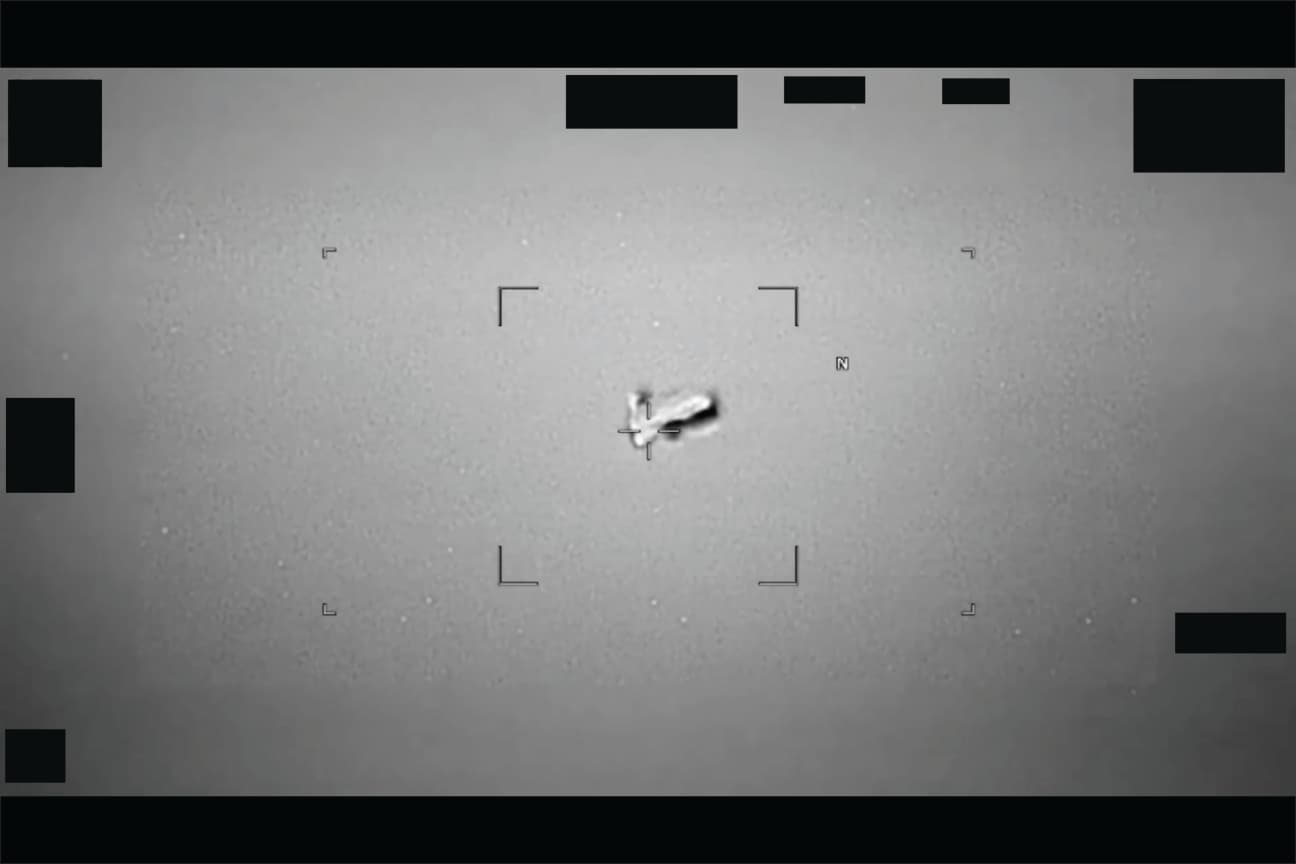
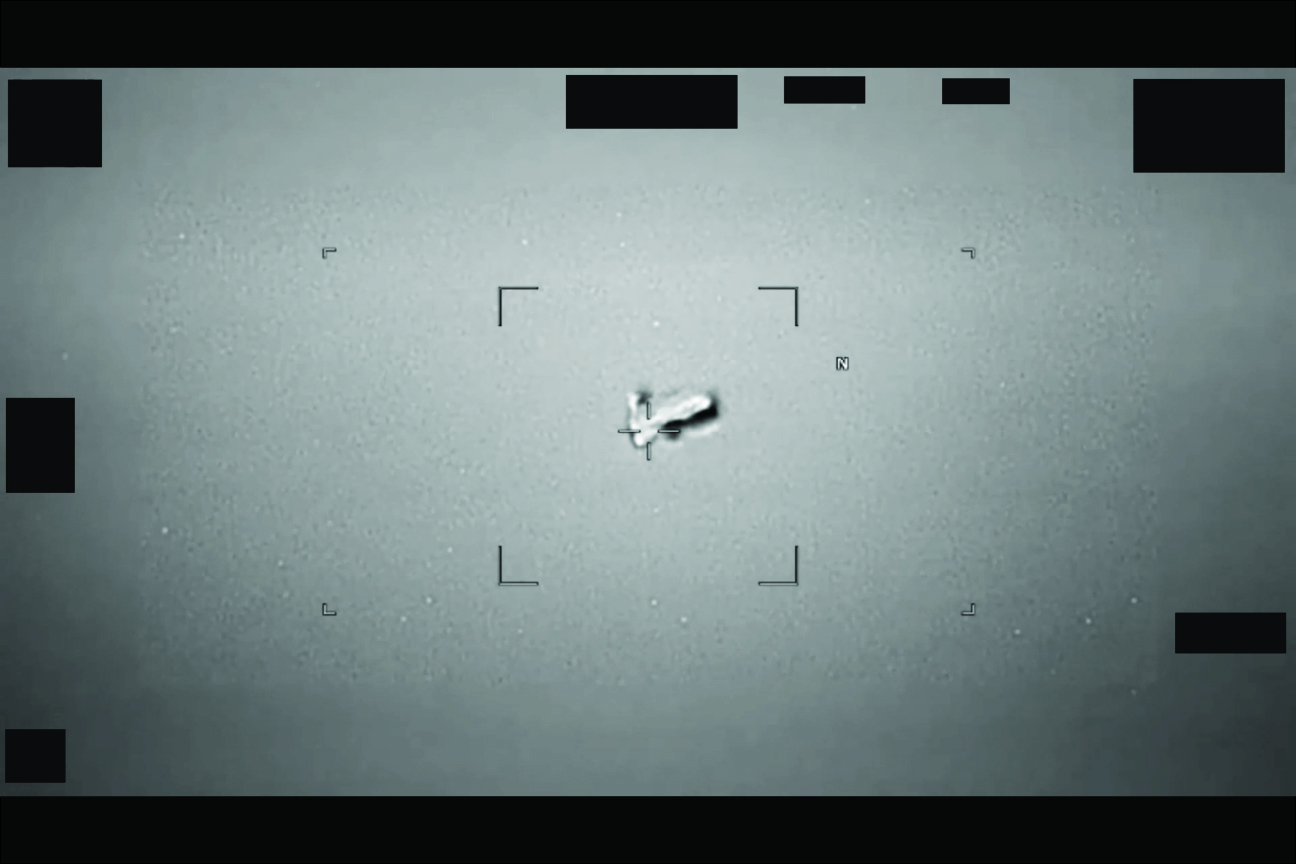
First observation — April 10, 2025: A U.S. aircraft observed one possible UAP (1X POSS UAP) for 12 seconds at 23:53 Zulu. The UAP's altitude and speed remained unknown. No interference with the U.S. aircraft was noted.
Second observation — April 11, 2025: A U.S. aircraft observed one possible UAP (1X POSS UAP) for 23 seconds at 00:07 Zulu. Altitude and speed were again unknown. No interference was noted.
It is worth noting that the two observations occurred in nearly direct succession — the first at 23:53Z on April 10, the second at 00:07Z on April 11, a gap of only 14 minutes. It is possible that two separate aircraft each encountered similar aerial phenomena in the same area at nearly the same time, though the document does not explicitly confirm this.
Analysis of the Standard Reporting Language
The uniform phrasing of both reports deserves attention. The term "POSS UAP" (Possible UAP) reflects deliberate terminological caution on the part of the reporting authors. The reports do not assert with certainty that these were UAP but rather classify the aerial object as a "possible UAP." The phrase "NO INTERFERENCE WAS NOTED" is a standard formula in military UAP reports, indicating that the UAP had no effect on the U.S. aircraft's electronic systems, navigation, or flight operations.
Significance
This document is of particular interest not for the content of the observations themselves but for what it reveals about the internal mechanism governing UAP information management. It demonstrates that there is an orderly, formal process in which:
- UAP observational data reaches an analysis tier at 12 AF / DET 3.
- It is reviewed against OUSD(I&S) for a decision on the appropriate classification level.
- A "tearline process" exists that allows specific portions of classified information to be published at the unclassified level without compromising the sensitive remainder.
- Even after information is approved as "unclassified," the document recording that disclosure approval continues to carry a SECRET//NOFORN classification.
The INDOPACOM geographic area encompasses the Pacific Ocean, the Indian Ocean, and East Asia — a vast zone of strategic relevance to great-power competition. The fact that the name INDOPACOM itself is approved for unclassified citation indicates that the broad geographic identity of the area is releasable, while the identities of specific units, aircraft, and precise locations remain classified.
Key People
- Initial requester: Name redacted [(b)(6)] — PAROC Intel Data Analysis Technician, Team Lead, 12 AF / DET 3. The official who contacted OUSD(I&S) after verifying the information by telephone with the operating unit.
- Approving respondent: Name redacted [(b)(6)] — Information Disclosure Analyst, Office of the Undersecretary of Defense for Intelligence and Security. The official who gave formal approval for the tearlines to be published at the unclassified level.
Locations
- INDOPACOM (Indo-Pacific Command): The stated area of responsibility, encompassing the Pacific and Indian Oceans and East Asia. More precise location data is not publicly available.
Incidents
| Incident | Date | Time (UTC) | Duration | Location | Pages |
|---|---|---|---|---|---|
| 1X POSS UAP, no interference | April 10, 2025 | 23:53Z | 12 seconds | INDOPACOM AOR | 2 |
| 1X POSS UAP, no interference | April 11, 2025 | 00:07Z | 23 seconds | INDOPACOM AOR | 2 |
Notable Quotes
"US AIRCRAFT OBSERVED 1X POSS UAP FOR 12 SECONDS AT 2353Z, FLYING AT UNK ALTITUDE AND UNK SPEED, NO INTERFERENCE WAS NOTED." — page 2, tearline from April 10, 2025
"US AIRCRAFT OBSERVED 1X POSS UAP FOR 23 SECONDS AT 0007Z, FLYING AT UNK ALTITUDE AND UNK SPEED, NO INTERFERENCE WAS NOTED." — page 2, tearline from April 11, 2025
"I wanted to clarify that these tearlines are approved at the UNCLASSIFIED level." — page 2, Information Disclosure Analyst, OUSD(I&S)
"Per our conversation, can you please confirm that the [REDACTED] tearlines below are at the UNCLASSIFIED level? Also, could you please confirm that we can use the AOR INDOPACOM." — page 1, PAROC Intel Data Analysis Technician, 12 AF / DET 3
Images
1 image - click any image to enlarge
Related Articles
- DoW/DoD · 2023
AARO Unresolved Case Analysis Update: The Western U.S. "Orbs Launching Orbs" Event, 2023
A signed All-domain Anomaly Resolution Office (AARO) Memorandum for Record, dated 05 June 2026 and signed by Director Jon T. Kosloski, summarizing the agency's ongoing…
- DoW/DoD · 2022
Unresolved UAP Report DOW-UAP-PR20: Digitally Annotated Still Image, Kuwait, May 2022
An Unresolved UAP Report (PR series) submitted by USCENTCOM to AARO, consisting of a single still image captured by a U.S. military sensor system in…
- DoW/DoD · 2023
Witness 1 Narrative: The Western U.S. Event, October 2023
The first-hand, free-form narrative of Witness 1 — one of several U.S. federal law enforcement special agents who reported unidentified anomalous phenomena over two days…
- DoW/DoD · 2023
Witness 2 Narrative: The Western U.S. Event, October 2023
The longest and most detailed first-hand narrative in the Western U.S. Event, from Witness 2 — a U.S. federal law enforcement special agent who, with…