Mission Report DOW-UAP-D6: UAP Observation over the Arabian Gulf, 2020
Source file: dow-uap-d6-mission-report-arabian-gulf-2020.pdf Originating agency: Department of Defense / DoD Modern UAP Date range: 2020 (precise date withheld by redaction) Page count: 7 (all read) High-significance pages: page 7 (the only page with readable text)
Official Blurb (from war.gov)
This document is a Mission Report (MISREP), a standardized reporting form the U.S. Military uses to record the circumstances surrounding its operations. U.S. military services often use MISREPs to report Unidentified Anomalous Phenomena (UAP) to AARO. The GENTEXT, or "general text" section of these reports often contains important qualitative, contextual information, distinguishing it from the more quantitative, or numerical, data found elsewhere in the report. A U.S. military operator reported observing a UAP. All descriptive and estimative language contained in this report reflects the reporter's subjective interpretation at the time of the event. Such characterizations should not be interpreted as a conclusive indication of the presence or absence of any intrinsic object features or performance characteristics.
Summary
DOW-UAP-D6 is a classified military mission report documenting a single UAP observation over the Arabian Gulf in 2020. All six of the document's first pages are withheld in their entirety under FOIA exemption 1.4(a), which protects information bearing on national security. Page 7 contains the only readable operational text, describing an observation of "1X PROB UAP" at a precise time and location, with the crew noting no mission impact before continuing its original tasking.
Research Article
Introduction
Document DOW-UAP-D6 is a classified military mission report submitted following an aerial operation over the Arabian Gulf in 2020. The document was partially released as part of the Department of Defense's 2026 wave of UAP disclosures. Its full title is "DOW-UAP-D6, Mission Report, Arabian Gulf, 2020"; it was created on April 29, 2026 — the release processing date — and last updated on May 7, 2026.
The document is subject to FOIA exemption 1.4(a), applicable to information classified at the national-security level. This is among the broadest withholding authorities available, which explains why six of the report's seven pages were released as completely blacked-out sheets containing no readable information.
Scope of the redaction
Pages 1 through 6 are entirely black, displaying only the "1.4(a)" exemption marker in the upper corner of each sheet. Based on standard MISREP architecture, the withheld pages most likely contained:
- Aircraft identification numbers, unit codes, and pilot names
- Precise operational coordinates, altitude, and flight routing
- Sensor equipment and collection capabilities (FLIR, radar, electro-optical systems)
- Mission tasking data
- Intelligence analysis of observed phenomena
From a research standpoint, the extent of the redaction implies that the reporting platform carried advanced collection capabilities whose disclosure would still be operationally sensitive. The fact that the document was released at all — even in near-total redacted form — reflects the broader institutional commitment to UAP transparency that has defined DoD and AARO policy since 2021.
Page 7: the readable operational entry
Page 7 is the only sheet containing legible text. The operational record reads:
"AT 1246Z, [1.4(a)] OBSERVED 1X PROB UAP IVO 3SKT4255899519. NO MISSION IMPACT, [1.4(a)] CONTINUED ORIGINAL TASKING."
Each element of this entry warrants examination.
Time: 1246Z — midday Universal Coordinated Time, placing the observation during daylight hours for the Arabian Gulf region.
Quantity: 1X — a single object. The "X" notation is standard U.S. military shorthand for numerical count.
Classification of the entity: PROB UAP — "Probable UAP." The "PROB" qualifier indicates the operator was not certain enough to assert a definitive UAP identification, but assessed the observed object as likely meeting that definition. This degree of analytical restraint is consistent with trained military observers distinguishing between what they are confident about and what they are not.
Location: IVO 3SKT4255899519 — "In the Vicinity Of" MGRS coordinate 3SKT4255899519. This Military Grid Reference System code can be partially decoded as follows:
- 3S — UTM zone 3, belt S
- KT — 100-kilometer grid square designator
- 42558 99519 — Easting and Northing to 1-meter precision
This grid position falls within the Arabian Gulf, in international or near-coastal waters in the general vicinity of Gulf states. The precision of the coordinate contrasts with the near-total redaction of the surrounding context, suggesting the location itself was assessed as less sensitive than the platform or mission details.
Mission impact: NO MISSION IMPACT — the object did not interfere with the crew's ability to carry out their assigned tasking.
Continuation: CONTINUED ORIGINAL TASKING — no deviation from the flight plan was made; the observation was recorded and the mission proceeded.
Operational context: U.S. presence in the Arabian Gulf in 2020
In 2020, U.S. aircraft operated extensively over the Arabian Gulf under multiple concurrent missions and mandates, including Operation Inherent Resolve (counter-ISIS), maritime and aerial surveillance of the Strait of Hormuz corridor, monitoring of Iranian military activity, and fleet support for U.S. naval forces. The high classification level of this document is consistent with a platform conducting sensitive collection in a contested environment where adversary awareness of U.S. capabilities could carry operational consequences.
Significance for UAP research
Even in its heavily redacted state, this document conveys several findings of research significance.
First, the U.S. military had standardized the practice of formally documenting and reporting UAP observations within operational mission reports by 2020. The term "PROB UAP" appearing in a classified operational document — not a special report or anomaly form, but a standard MISREP — reflects institutional normalization of UAP reporting.
Second, the "PROB" qualifier demonstrates analytical discipline. The reporting operator attempted to distinguish between a confirmed UAP and a probable UAP, and chose the more cautious characterization. This suggests training and awareness of the distinction, rather than reflexive labeling.
Third, the explicit "NO MISSION IMPACT" annotation indicates that the military documentation framework was concerned not only with the phenomenon itself but also with its operational consequences — a pragmatic focus that has characterized U.S. UAP policy since 2019.
Fourth, release of this document — even with six pages entirely blacked out — is part of a broader, accelerating trend of UAP transparency that began with the establishment of AARO and has continued through the PURSUE Initiative releases of 2026.
Key People
All personnel names have been withheld under FOIA exemption 1.4(a). Identification fields for unit code, operator name, and reporting authority are entirely redacted.
Locations
- Arabian Gulf (Arabian Gulf / Persian Gulf) — general area of operation
- MGRS 3SKT4255899519 — precise observed location, situated in the Arabian Gulf
Incidents
| Incident | Date | Location | Pages |
|---|---|---|---|
| Observation of 1X PROB UAP | 2020, 1246Z (date withheld) | IVO 3SKT4255899519, Arabian Gulf | page 7 |
Notable Quotes
"AT 1246Z, [1.4(a)] OBSERVED 1X PROB UAP IVO 3SKT4255899519. NO MISSION IMPACT, [1.4(a)] CONTINUED ORIGINAL TASKING." — page 7
Images
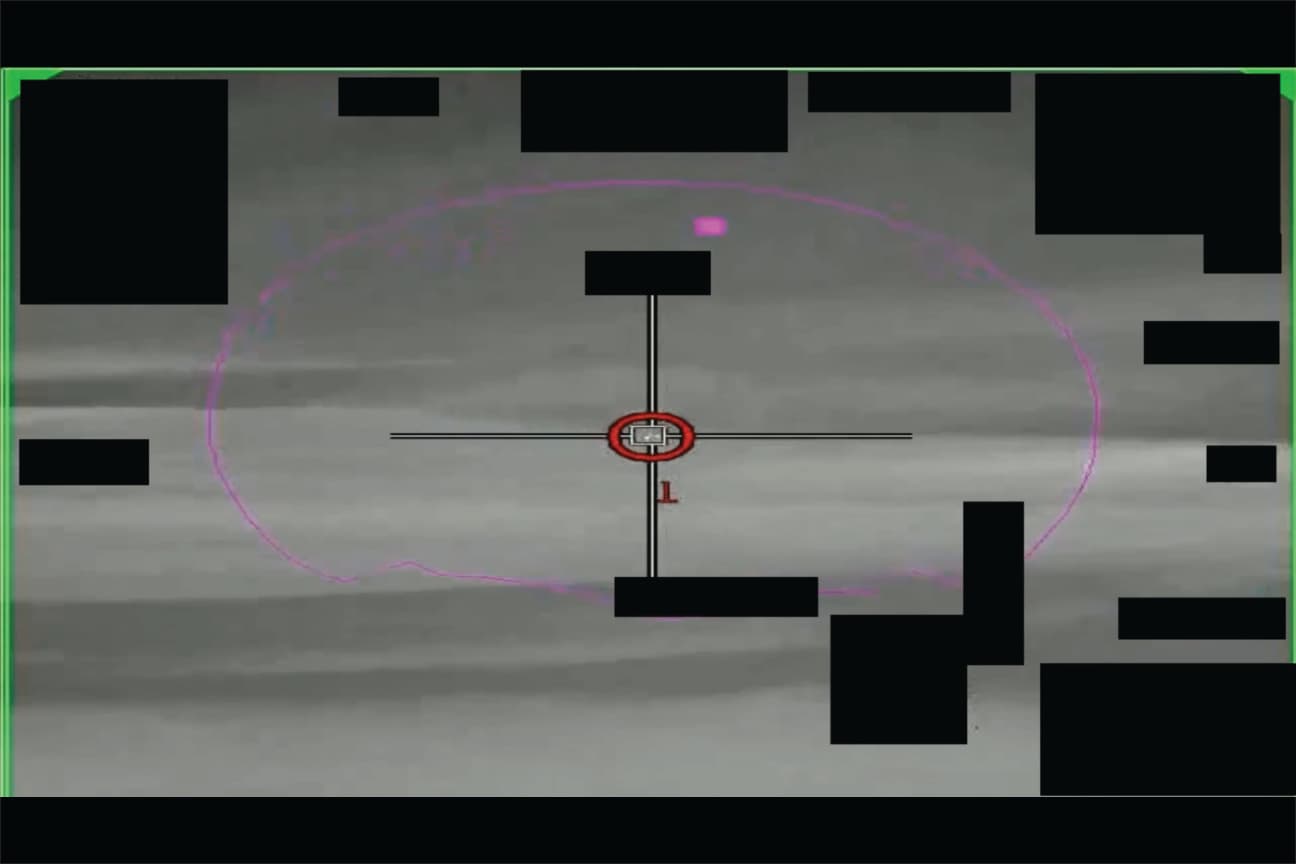
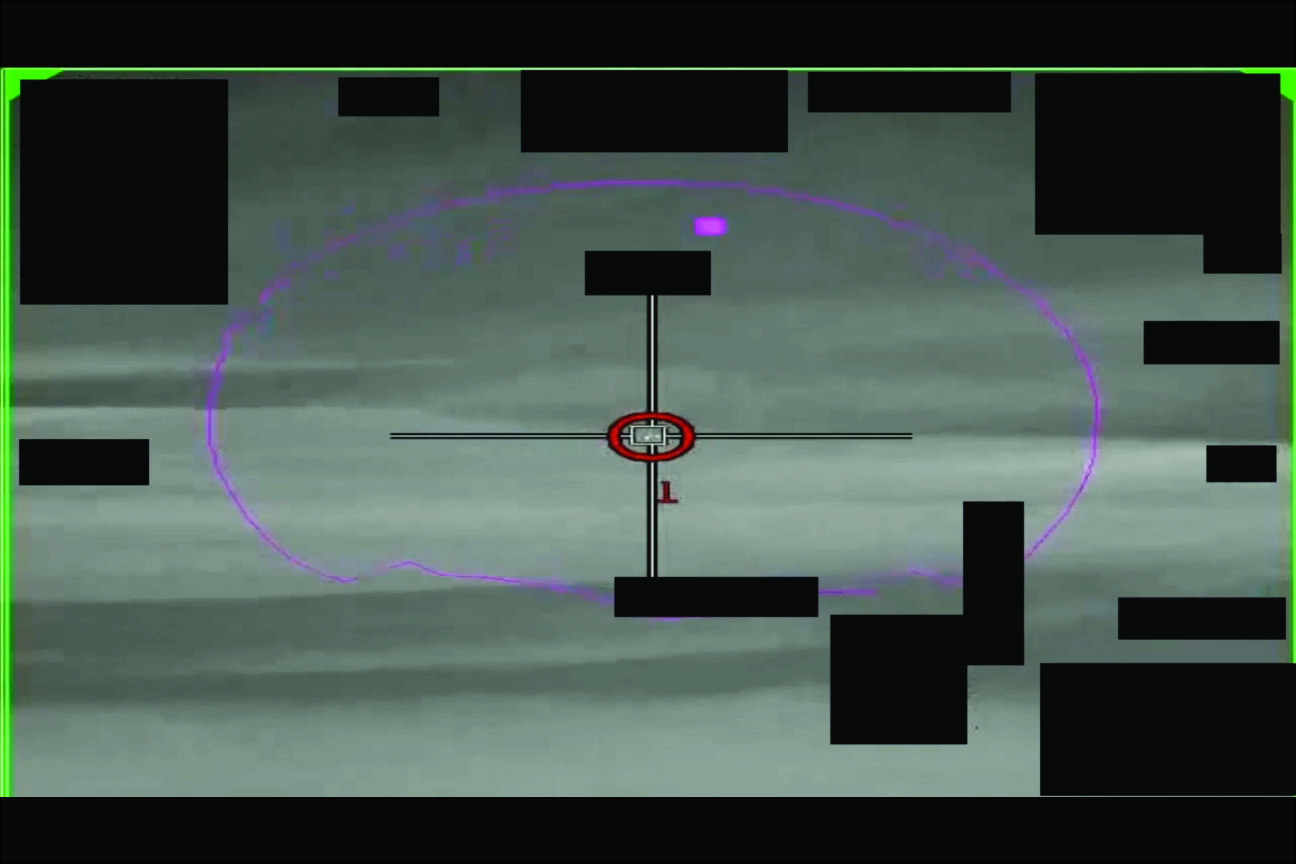
1 image - click any image to enlarge
Related Articles
- DoW/DoD · 2020-07-16
Mission Report DOW-UAP-D65: Three UAP Observations in the Persian Gulf, July 16, 2020
USCENTCOM Mission Report Misrep 4472514 documents three separate observations of an unidentified aerial phenomenon during a single ISR sortie over the Persian Gulf, the Strait…
- DoW/DoD · 2020-09-15
Mission Report DOW-UAP-D62: UAP Observation, Link-Loss Events, and Iranian Air-Defense Intercepts over the Strait of Hormuz, September 2020
Mission Report MISREP 4782130 from the U.S. Air Force 482 ATKS / 432 AEW documents an intense 21-hour ISR sortie over the Strait of Hormuz…
- DoW/DoD · 2020
Range Fouler Debrief Form — Middle East Theater, May 2020
This document is a Range Fouler Debrief Form re-reviewed for release by Brigadier General Richard A. Harrison, USCENTCOM Chief of Staff. It records a UAP…
- DoW/DoD · 2020
Mission Report: Formation of Unknown Flying Objects over the Persian Gulf, August 2020
MISREP number 4685903, filed by the 482 ATKS unit of the 432 AEW under USCENTCOM, documents a 21-hour ISR/SIGINT sortie over the Arabian Gulf, Strait…