NASA-UAP-D1: Apollo 12 Technical Air-to-Ground Voice Transcript, November 1969
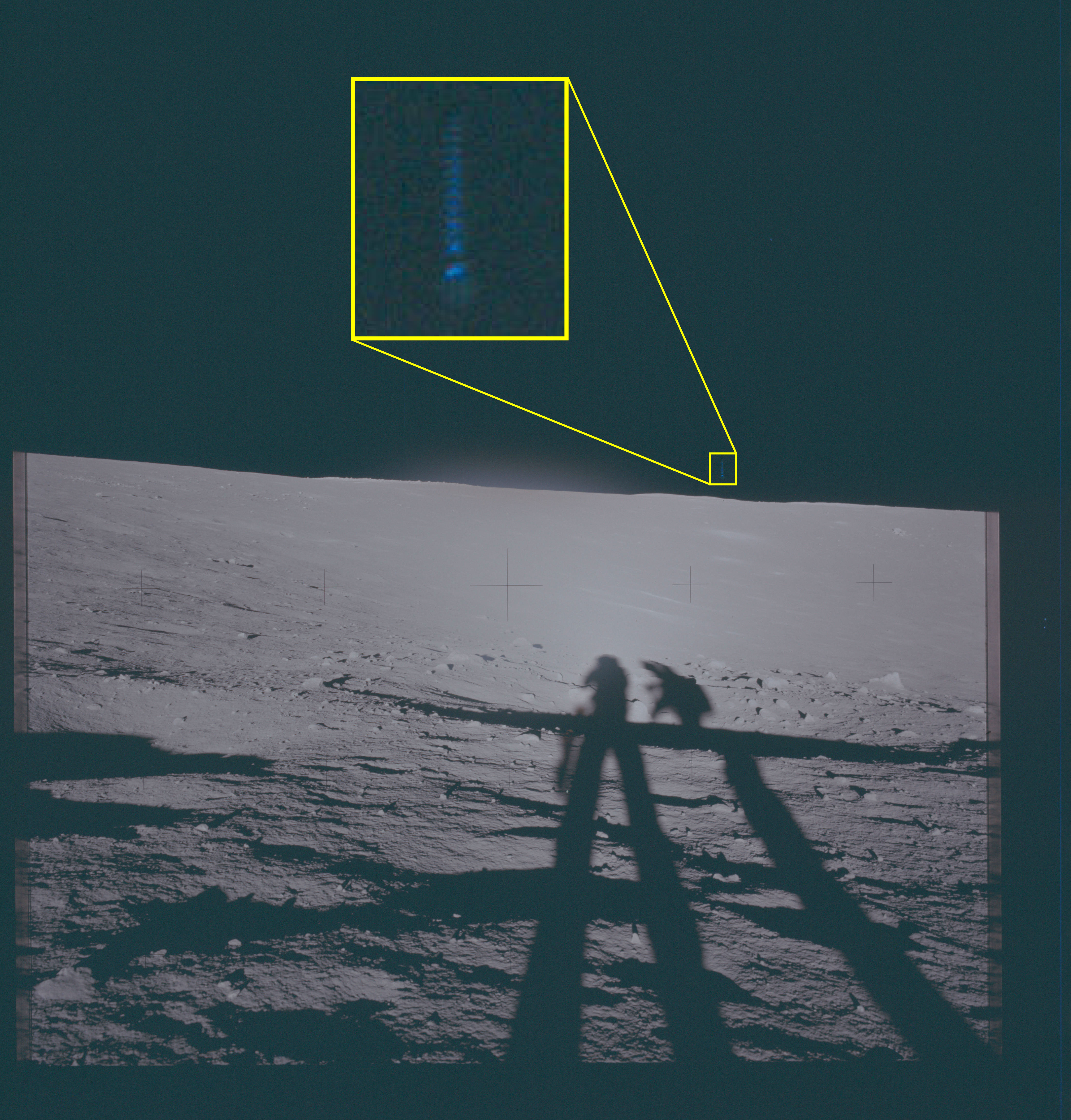
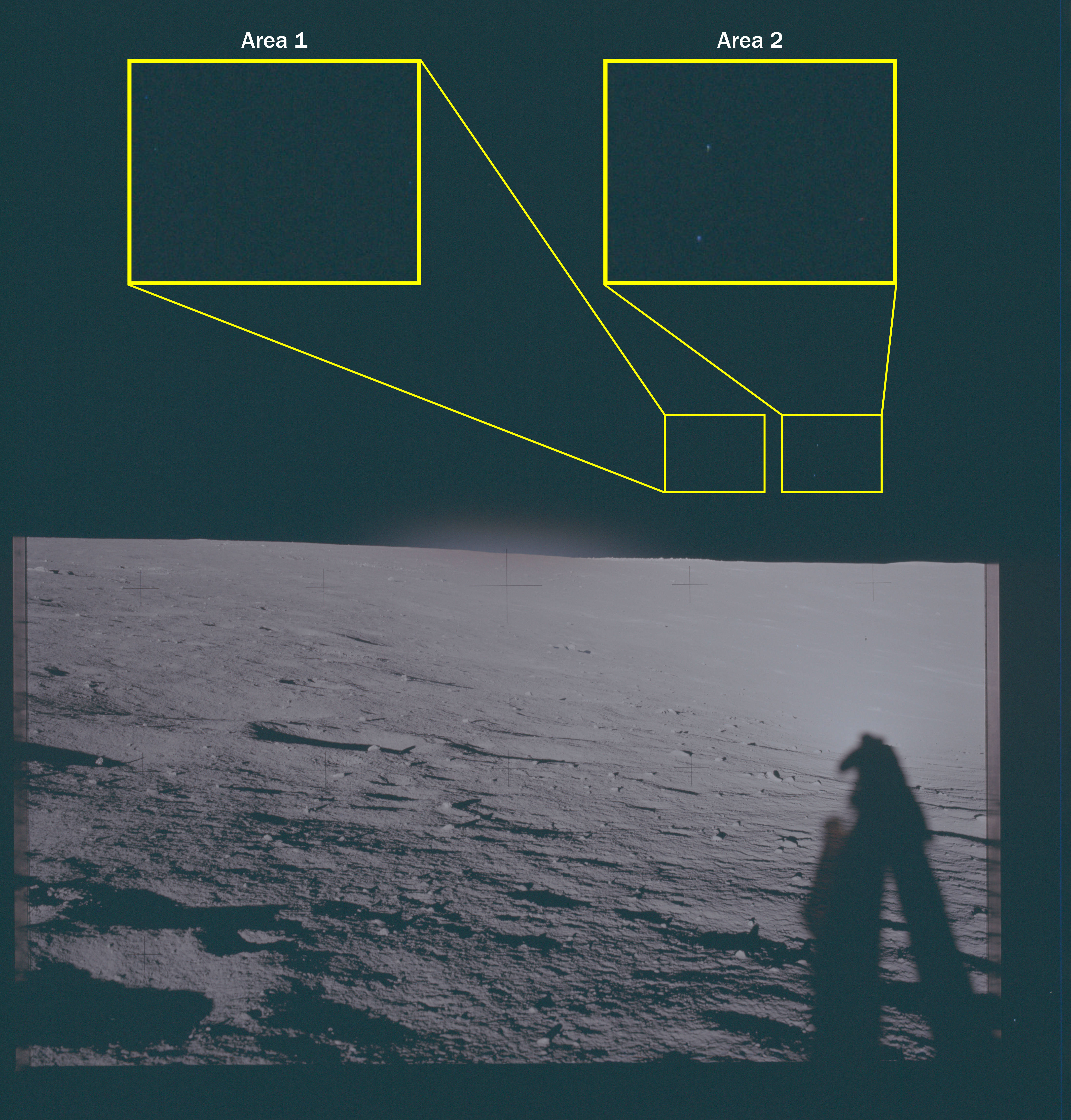
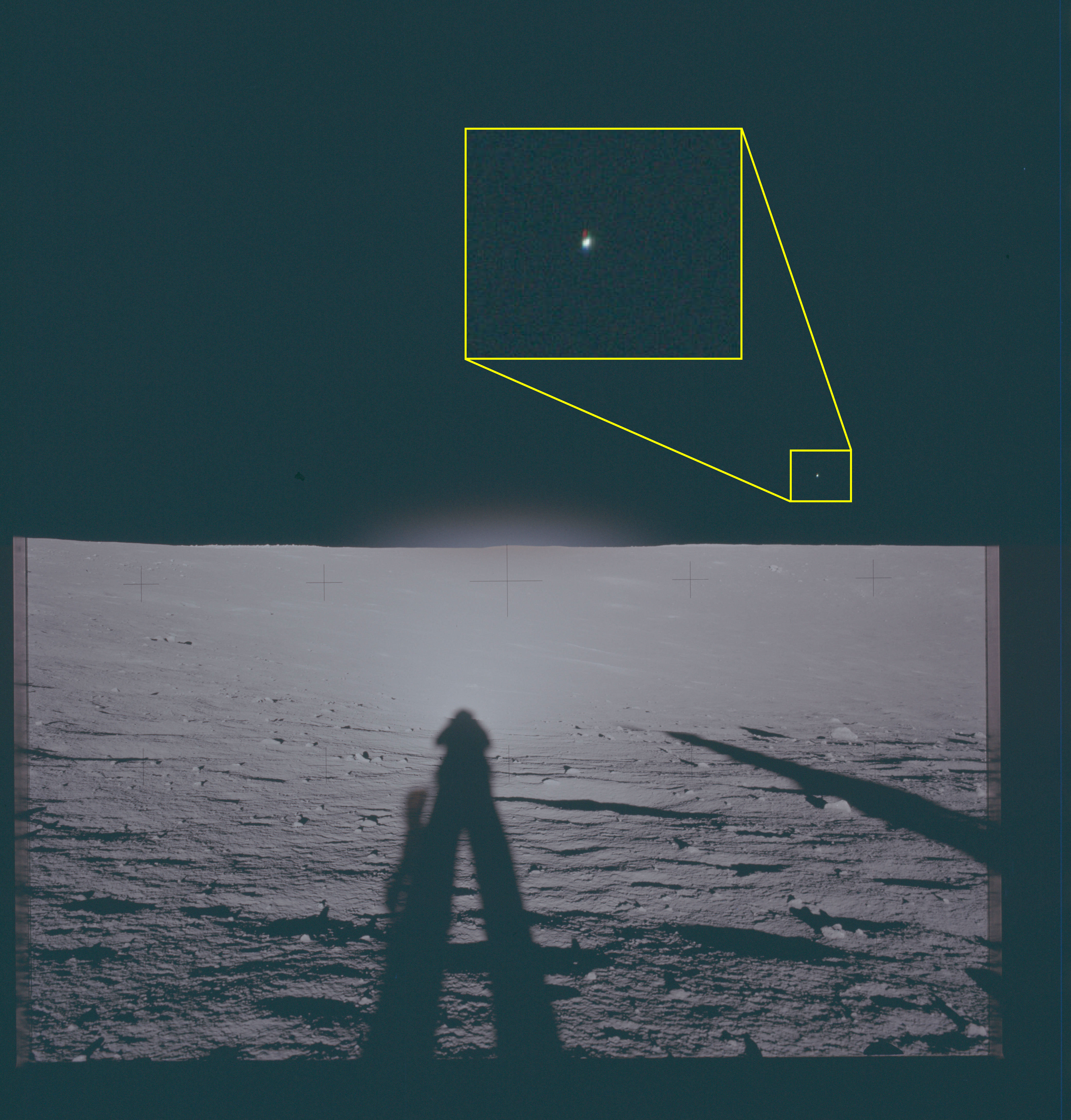
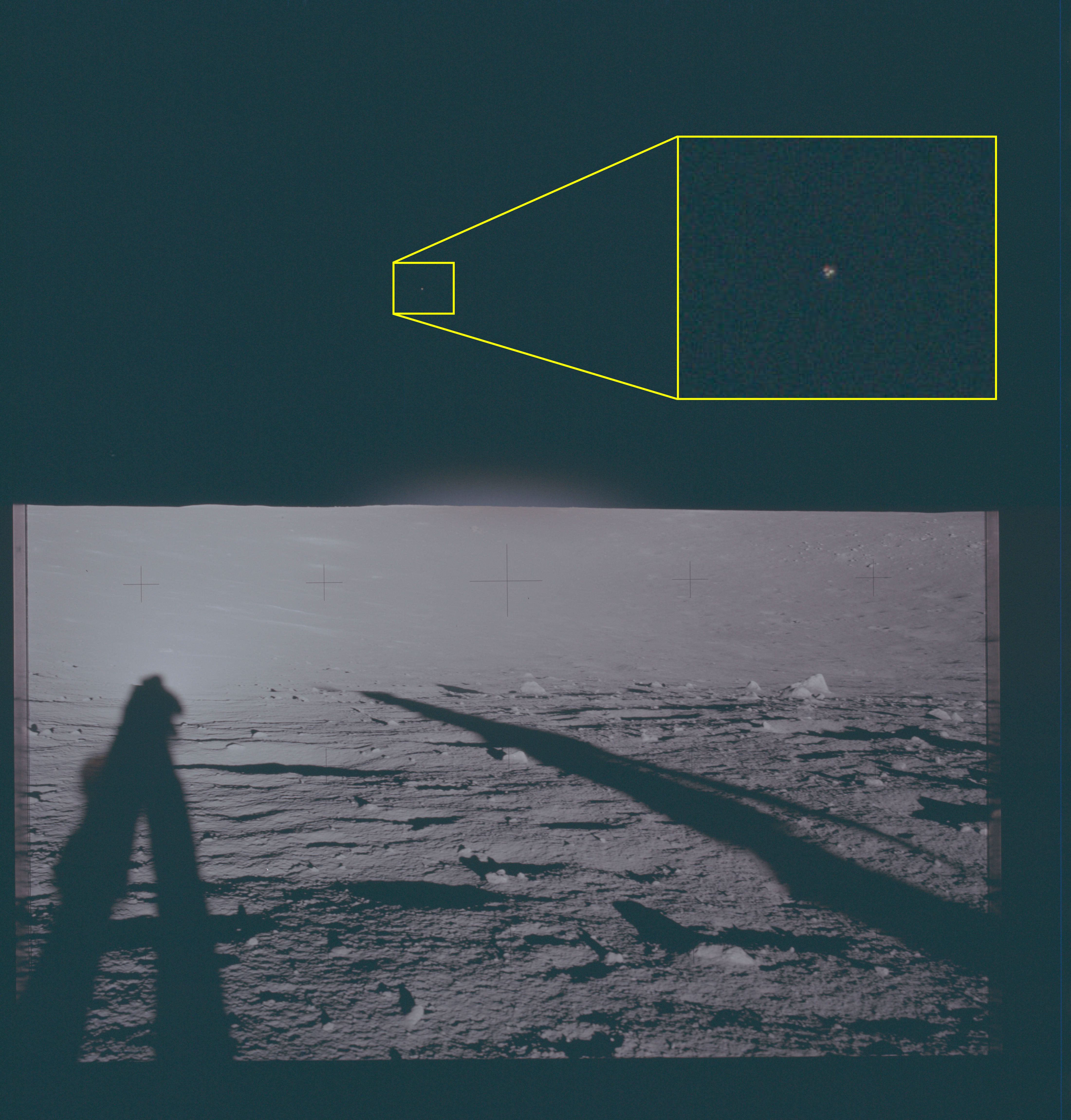
Source file: nasa-uap-d1-apollo-12-transcript-1969.pdf Originating agency: National Aeronautics and Space Administration (NASA) Incident date: November 19, 1969 (within the mission timeframe) Page count in excerpt: 4 (all read) High-significance pages: page 742 (start of first period), page 743 (Bean's AOT observation), page 748 (continuation of phenomena), page 778 (Conrad's report and tracking light)
Official Blurb (from war.gov)
Apollo 12 was the fourth crewed U.S. mission to the Moon and the second to land astronauts on the lunar surface. This document is an excerpt from the Apollo 12 Technical Air-to-Ground Voice Transcription, November 1969, highlighting two periods in which astronauts reported observing unidentified phenomenon: a one hour period on the fifth day, and a two minute period on the sixth day.
Summary
NASA-UAP-D1 is a verbatim transcript of voice communications between the Apollo 12 crew and Mission Control in Houston, documenting two separate incidents in which crew members reported unidentified observations in cislunar space. The first incident, lasting approximately one hour (Day 5, 19:14:58 to Day 5, 20:12:14 mission elapsed time), includes the primary observation by Lunar Module Pilot Alan Bean (Alan L. Bean) through the Alignment Optical Telescope (AOT) at 05:19:27:25 — particles and light flashes appearing to "sail off into space" and "escape the Moon." The second incident, lasting approximately two minutes (Day 6, 00:21:42 to Day 6, 00:23:33), documents Commander Charles "Pete" Conrad's report of tiny floating debris alongside the Lunar Module, previously illuminated by the spacecraft's tracking light, and his conclusion that the tracking light had burned out. The crew also included Command Module Pilot Richard "Dick" Gordon.
Research Article
Introduction: Apollo 12
Apollo 12 launched on November 14, 1969, and was the second Apollo mission to land humans on the Moon. The crew comprised three astronauts: Charles "Pete" Conrad (Commander, CDR), Richard "Dick" Gordon (Command Module Pilot, CMP), and Alan L. Bean (Lunar Module Pilot, LMP). The Command Module carried the call sign "Yankee Clipper" and the Lunar Module was named "Intrepid." The mission successfully landed Conrad and Bean in the Ocean of Storms (Oceanus Procellarum) on November 19, 1969 — within 200 meters of the Surveyor 3 robotic probe that had landed there two and a half years earlier.
NASA-UAP-D1 is not the complete Apollo 12 transcript (which runs to hundreds of pages) but a curated excerpt focused on two time windows in which the crew reported unidentified observations. The official transcript format includes four columns: a mission-elapsed timestamp in DD HH MM SS (day, hour, minute, second from launch), a source code (CC for CapCom, CDR-LM for Commander from the Lunar Module, LMP-LM for the Lunar Module Pilot, CMP for the Command Module Pilot), and the verbatim text. The tape pages are labeled 90/3, 90/4, 90/9, and 93/8, corresponding to document pages 742, 743, 748, and 778.
Bean's AOT Observation (Day 5, 19:27:25)
The central moment in the document is Alan Bean's report from inside Intrepid, shortly after Yankee Clipper — the Command Module traveling in a separate orbit — came within communications range. Bean was looking through the Alignment Optical Telescope (AOT) — an optical instrument mounted in the Lunar Module, used for aligning the inertial guidance platform (IMU) by sighting stars. The AOT is a narrow-field telescope providing a sharp view of deep space. At 05:19:27:25, Bean reported:
"Roger. When you look out the AOT in the dark quadrant? You can see these lights — particles of light, flashes of light just seem to come from — in this case, I'm looking in quadrant 1 which is the left one. It's coming from behind me, the left, and they're just sailing off in space. I was thinking they're dropping from my water boiler, but it looks like some of those things are escaping the Moon. They really haul out of here and just press off at the stars."
Several elements of this report are unusual. First, Bean describes a distinct visual phenomenon: "particles of light" and "flashes of light" seen in the dark quadrant of the AOT — meaning the area not illuminated by the Moon itself. Second, he presents an initial hypothesis — that the particles might be fluid ejected from the water boiler of his suit or the Lunar Module, a known source of optical contamination in space. But he immediately rejects it: "it looks like some of those things are escaping the Moon." The phrase "escaping the Moon" is highly unusual in standard astronaut vocabulary. Third, he describes rapid, directed movement: "They really haul out of here and just press off at the stars." Mission Control responded with a single word — "Roger" — without requesting further clarification or offering alternative explanations, which is atypical of NASA's standard protocol when receiving an anomalous report.
Bean's Second Report on the AGS Phenomenon (Day 5, 20:09:34)
About an hour after the AOT observation, Bean reported an additional anomaly — this time related to the Abort Guidance System (AGS) navigation computer:
"Got sort of an interesting thing going on AGS right now. I didn't notice earlier, but it may just be because the lights are brighter now. I'm getting an all 8's flash on both the address and the information registers at about one-fifth the brilliance of the normal numbers. And a — It's pulsing every second."
Mission Control replied that "Fredo" — a technician by the name of Fredo — had noticed this behavior during ground tests at Grumman's Bethpage plant, and that it was likely electromagnetic interference (EMI) coupled into the display. While Houston offered a working explanation for the AGS display anomaly, it is notable that this second unusual event occurred within the same narrow time window as the AOT observation — two unrelated anomalies in one brief period.
Conrad's Floating Debris Report (Day 6, 00:21:51)
The second UAP observation, on the mission's sixth day, occurred during the orbital rendezvous between Intrepid and Yankee Clipper following the ascent from the Moon. At 06:00:21:42, Gordon from aboard Yankee Clipper complained that he could not acquire Intrepid through the sextant: "Your blinking light's just not blinking, that's all." In response, Conrad provided the following detailed account:
"Hey, Houston. It looks like our tracking light's burned out. Dick hasn't been able to find us in this sextant. And on the first nightside pass we had little bits and pieces floating along with us and we could tell that the tracking light was flashing on them. And we still have, I've presumed to think, bits and pieces floating along and nothing's flashing on them, so I'm pretty sure it burned out."
Conrad's analysis is twofold: he describes a cluster of "bits and pieces" — tiny fragments — traveling alongside the Lunar Module, and infers from the absence of reflected flashing that the tracking light must have failed. Later, at 06:00:22:59, Mission Control's power monitoring indicated the tracking light was actually on; Conrad confirmed it, turned it off (06:00:23:11), and requested verification that current had dropped. Control confirmed. Notably, the fragments themselves continued to travel alongside the spacecraft — but the light source that had made them visible during the nightside pass was now in question: if the tracking light was functional, why were they not illuminated? This discrepancy is recorded in the transcript but not resolved within it.
Analysis of Possible Explanations
Several conventional hypotheses apply to these observations.
-
Ice particles — waste fluids vented from the spacecraft's life support systems, including the water boiler, freeze rapidly in the space environment. Such ice granules, illuminated by sunlight or the spacecraft's own lights, are a known optical phenomenon. Bean himself proposed this (water boiler) before rejecting it.
-
Paint and thermal insulation particles — flaking paint or multilayer insulation (MLI) particles ejected due to internal pressure or structural vibration. This is a well-documented phenomenon in the history of human spaceflight.
-
S-IVB debris — the Saturn V's third-stage engine, which for Apollo 12 specifically was placed on a heliocentric orbit after a course correction, with an option to send it on a controlled impact with the Moon. Some of its components or frozen propellant pellets may have traveled alongside the spacecraft or been visible from it.
-
Internal instrument effect — the light flashes within the AOT could result from cosmic rays striking the retina of the observer — the "cosmic ray flash" phenomenon documented by many astronauts. However, Bean describes particles with direction and movement, not sudden undirected flashes in his visual field.
-
Unknown phenomenon — the possibility that what is documented does not fit any known category.
The relevance of these explanations varies between the two incidents. Bean's AOT observation features language of directed, purposeful movement — "they really haul out of here and just press off at the stars" — which does not match static ice or paint particles. Conrad's observation is primarily of static co-traveling debris, and the puzzlement concerns the illumination source rather than the particles themselves.
Significance
UAP observations by astronauts in space are rare relative to ground-based or aviation reports. Astronauts undergo intensive training, are capable of recognizing ordinary debris particles, ice pellets, and routine optical effects, and operate under close professional supervision by Houston. Bean's report — "particles of light, flashes of light just seem to come from... in this case, I'm looking in quadrant 1 which is the left one. It's coming from behind me, the left, and they're just sailing off in space" — presents vivid phenomenological language: a trained astronaut describing something he cannot explain in terms of his equipment or expected physical sources. The combination of that observation with the AGS anomaly in the same narrow time window creates a cluster of unusual data points that merits continued research.
Document NASA-UAP-D1 is the first in the D-series of Release 1 from the PURSUE initiative. The selection of these specific excerpts from a transcript hundreds of pages long indicates that the government review team identified these passages as significant. The fact that the document was placed under the NASA / Department of State category rather than a purely technical astronaut context also signals that the defense and intelligence community sees UAP research value in this material.
Key People
- Charles "Pete" Conrad — Commander, Apollo 12 (CDR). Veteran NASA astronaut, the third human to walk on the Moon. Reported the co-traveling floating debris and the tracking light anomaly on Day 6.
- Richard "Dick" Gordon — Command Module Pilot (CMP). Remained in "Yankee Clipper" orbiting the Moon during the landing. He was the first to report that he could not acquire Intrepid through the sextant.
- Alan L. Bean — Lunar Module Pilot (LMP). The fourth human to walk on the Moon. He made the primary AOT observation of "particles escaping the Moon" and also reported the AGS anomaly.
Locations
- The Moon — primarily the Ocean of Storms (Oceanus Procellarum), site of the landing.
- Cislunar Space — the region between Earth and the Moon, where the observations occurred.
- Lunar Module "Intrepid" — where Conrad and Bean were located during the observations.
- Command Module "Yankee Clipper" — where Gordon was located.
- Mission Control, Houston — the ground control center.
Incidents
| Incident | Date / Mission Elapsed Time | Location | Pages |
|---|---|---|---|
| Alan Bean's AOT observation of "particles of light" and "flashes of light" sailing into space and "escaping the Moon" | Day 5, 19:14:58 to 20:12:14 (primary observation at 19:27:25) | Lunar Module "Intrepid," lunar orbit | 742, 743, 748 |
| Pete Conrad's report of tiny debris floating alongside the spacecraft, previously illuminated by the tracking light, and inference that the tracking light burned out | Day 6, 00:21:42 to 00:23:33 | Lunar Module "Intrepid," during orbital rendezvous | 778 |
Notable Quotes
"When you look out the AOT in the dark quadrant? You can see these lights — particles of light, flashes of light just seem to come from — in this case, I'm looking in quadrant 1 which is the left one. It's coming from behind me, the left, and they're just sailing off in space. I was thinking they're dropping from my water boiler, but it looks like some of those things are escaping the Moon. They really haul out of here and just press off at the stars." — Alan Bean (LMP-LM), Day 5, 19:27:25, page 743
"Hey, Houston. It looks like our tracking light's burned out. Dick hasn't been able to find us in this sextant. And on the first nightside pass we had little bits and pieces floating along with us and we could tell that the tracking light was flashing on them. And we still have, I've presumed to think, bits and pieces floating along and nothing's flashing on them, so I'm pretty sure it burned out." — Pete Conrad (CDR-LM), Day 6, 00:21:51, page 778
"Got sort of an interesting thing going on AGS right now. I didn't notice earlier, but it may just be because the lights are brighter now. I'm getting an all 8's flash on both the address and the information registers at about one-fifth the brilliance of the normal numbers. And a — It's pulsing every second." — Alan Bean (LMP-LM), Day 5, 20:09:34, page 748
Images
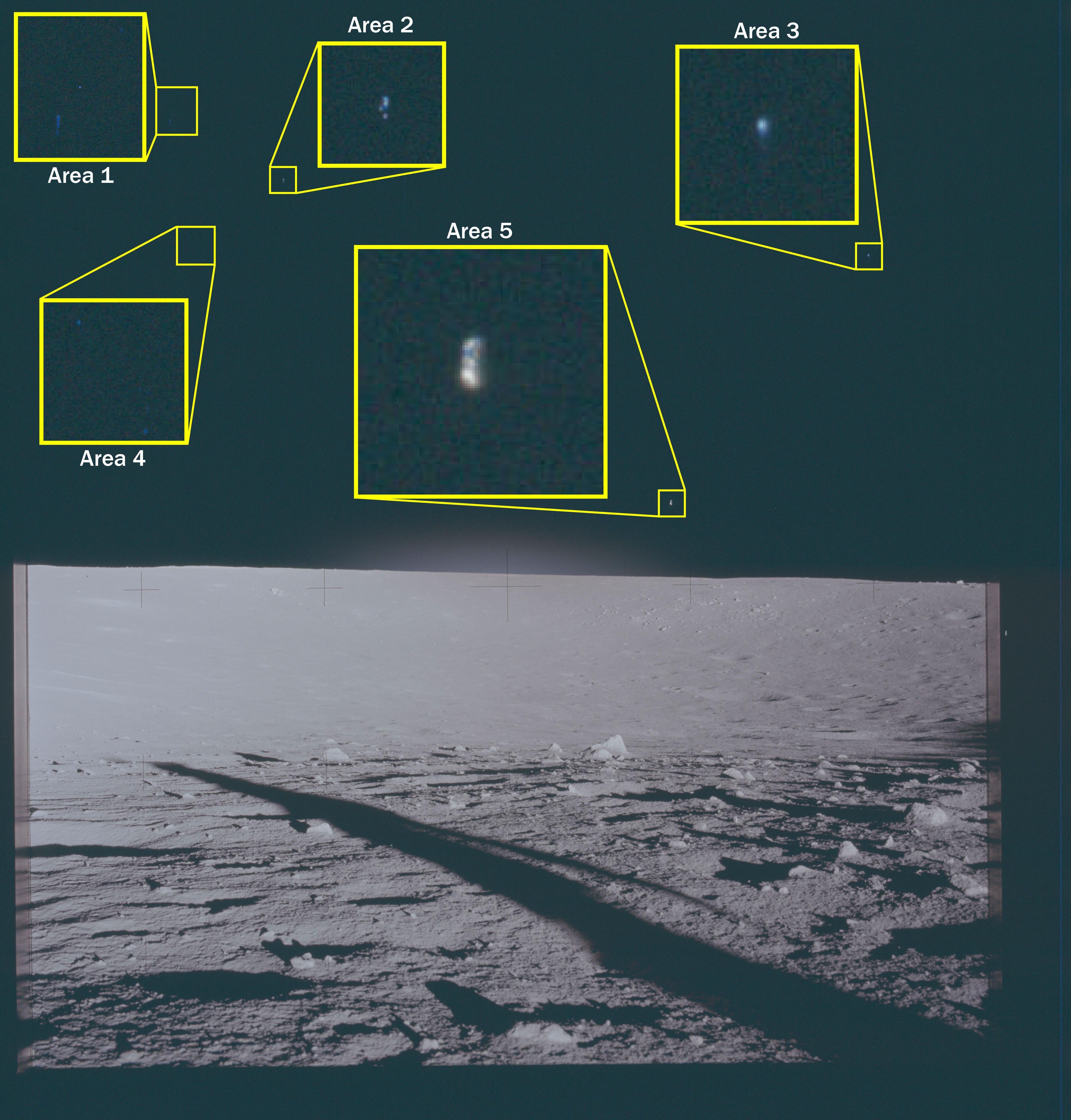
5 images - click any image to enlarge
Related Articles
- NASA · 1972-12-07
NASA-UAP-D2: Apollo 17 Air-to-Ground Voice Transcript, December 1972
Apollo 17 was the ninth crewed U.S. mission to the Moon and the last to land astronauts on the lunar surface. This document is an…
- NASA · 1972-12-07
Apollo 17 Technical Crew Debriefing: Light Flashes and a Lunar Surface Observation, 1973
An excerpt from the Apollo 17 Technical Crew Debriefing conducted January 4, 1973, two and a half weeks after the crew returned from the Moon…
- NASA · 1973-05-14
Skylab Technical Crew Debriefings, 1973–1974: Light Flashes, a 'Reddish Satellite,' and Maneuvering Lights Around the Space Station
Technical crew debriefings from all three Skylab missions (1973–1974) document anomalous visual phenomena observed in low Earth orbit. Skylab 2 crew reported internal eye flashes…
- NASA · 1972-12
NASA-UAP-D5: Apollo 17 Science Crew Debriefing — Anomalous Ultraviolet Spectrum, 1973
An excerpt from the Apollo 17 Science Crew Debriefing of January 8, 1973, in which Dick Henry, co-investigator on the ultraviolet experiment, reports unexpected findings…