Classified Email Correspondence on an Oval UAP Observation — October 31, 2024
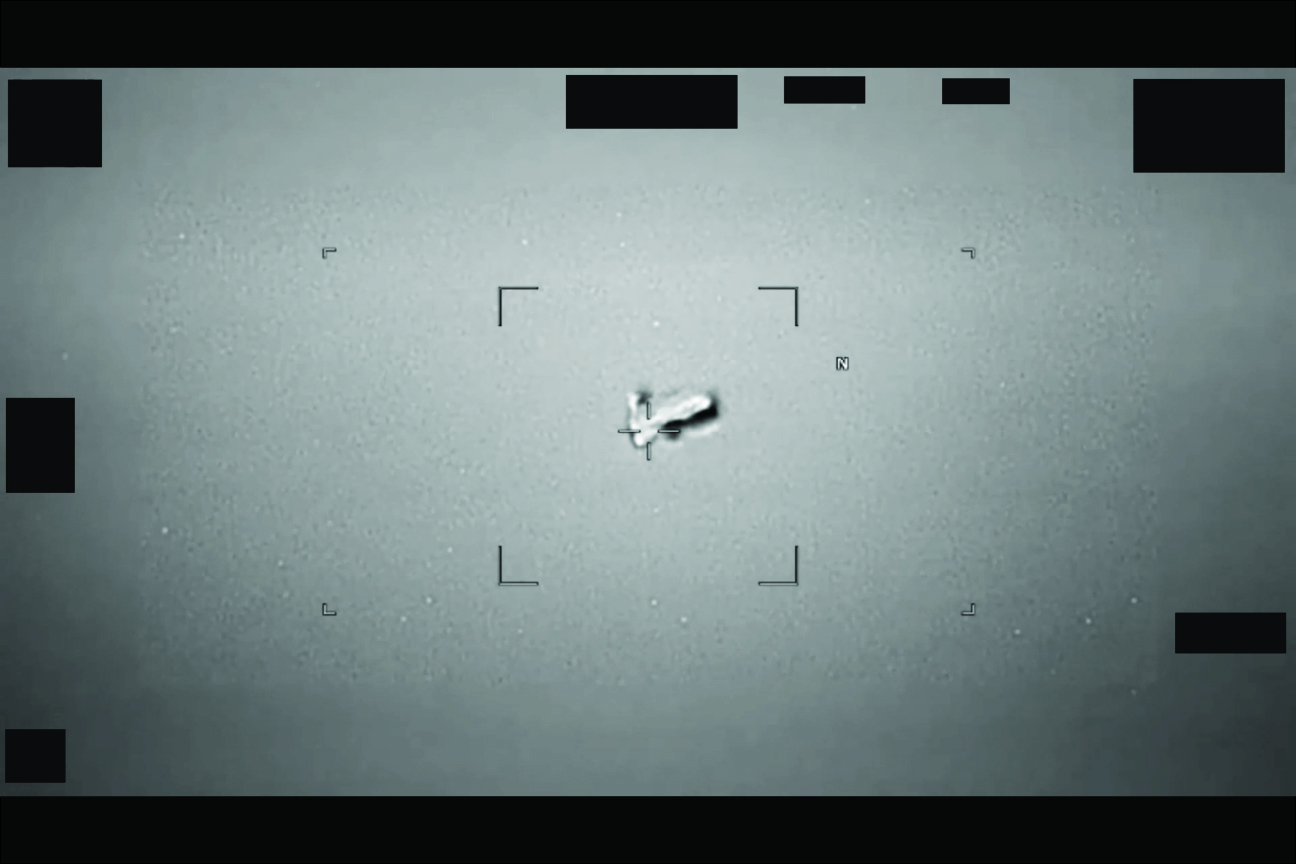
Source file: dow-uap-d52-email-correspondance-na-august-2024.pdf Originating agency: Department of Defense / DoD Modern UAP Date range: October 2024 (incident: October 31, 2024) Page count: 2 (all read) High-significance pages: 1, 2
Official Blurb (from war.gov)
This document is email correspondence describing the content of a mission report and requesting clarification on its content. All descriptive and estimative language contained in this report reflects the reporter's subjective interpretation at the time of the event. Such characterizations should not be interpreted as a conclusive indication of the presence or absence of any intrinsic object features or performance characteristics.
Summary
This document contains a two-page chain of classified email correspondence (SECRET//NOFORN) between two government officials whose identities were redacted under FOIA exemption (b)(6). The exchange concerns the coordination of public information release regarding a UAP sighting that occurred on October 31, 2024, in which a U.S. aircraft tracked a possible oval/orb-shaped object at low speed for more than two hours. The discussion focuses on whether the year of the incident may be included in the information approved for public release.
Research Article
Introduction
Among the documents released by the U.S. Department of Defense under the Freedom of Information Act, one short but significant email thread stands out: a two-page exchange classified SECRET//NOFORN. The document consists of two emails — one from an intelligence data analysis technician at PAROC, assigned to the 15 AF / DET 1 unit, and one from an information disclosure analyst. Both parties' names were redacted under FOIA exemption (b)(6), which protects the personal privacy of individuals.
Who Sent What and Why
Sender of the first email (page 2): An Information Disclosure Analyst whose name is redacted. His request was clear and specific: he asked an authorizing official for approval to include the year of the incident in material about to be released publicly. He noted that the month and day of the event had already been approved, but the year had not yet been cleared for release.
Sender of the second email (page 1): A PAROC Intel Data Analysis Technician at 15 AF / DET 1. This role indicates the involvement of an air-command entity in research and monitoring. In his reply he included the information he had been asked to approve regarding the incident, with a brief description of the event placed below the "UNCLASS tear line" — the dividing line separating classified from unclassified information.
Description of the Central Incident
The unclassified line included in the body of the email describes the incident as follows:
On October 31, 2024, a U.S. aircraft observed a possible UAP. The object appeared to be oval/orb shaped and was likely moving at a low speed. The U.S. aircraft maintained visual contact with the possible UAP for over two hours.
That duration of sustained visual contact is both concrete and exceptional. The great majority of UAP observations last only a few minutes. A sighting maintained for more than two hours lends considerably greater credibility to the report and indicates an event of sufficient intensity to require internal document coordination.
The Bureaucratic Dynamics the Document Reveals
Beyond the observation itself, the correspondence illuminates an important internal process: the mechanism by which information is approved for release. The exchange makes clear that data relating to this incident passed through a "tear line process" in which officials decide which details may be moved to the unclassified tier. In this case, the deliberation centered on something that might appear trivial — the year of the event.
The fact that even so basic a datum as the year of an incident requires separate authorization before publication underscores the high degree of sensitivity the U.S. military attaches to UAP reporting. Nothing about these releases is automatic.
Significance
Despite its brevity, this document is significant on several levels.
First, it confirms that on October 31, 2024, an officially documented UAP observation was made by a U.S. aircraft crew. Second, the observation duration of over two hours is exceptional and implies a high-intensity event. Third, the SECRET//NOFORN classification indicates that additional details about the incident remain classified and have not been published. Fourth, the involvement of 15 AF / DET 1 and the PAROC unit suggests ongoing, organized monitoring of UAP phenomena within the military structure.
Key People
| Name | Role | Unit | Notes |
|---|---|---|---|
| (b)(6) | PAROC Intel Data Analysis Technician | 15 AF / DET 1 | Replied with incident details |
| (b)(6) | Information Disclosure Analyst | Unknown | Sent the original request to approve the year of the incident |
Locations
The location of the incident is not specified in the released document. Geographic information is presumably contained in the classified portion that was not released.
Incidents
| Incident | Date | Location | Pages |
|---|---|---|---|
| Oval/orb-shaped UAP observed by a U.S. aircraft for 2+ hours | October 31, 2024 | Unknown (classified) | 1–2 |
Notable Quotes
"31 OCT 24, U.S Aircraft observed a possible UAP. It appeared to be oval/orb shaped, likely moving at a low speed. The U.S Aircraft had eyes on the poss UAP for over 2 hours."
(//UNCLASSIFIED//)
"Could you please approve the use of the year this incident took place? Currently you have approved the month and the day, we request it includes the year."
(CLASSIFICATION: SECRET//NOFORN)
"Below is the requested additional information (include the year) to the UNCLASS tear line."
(CLASSIFICATION: SECRET//NOFORN)
This document was released pursuant to the U.S. Freedom of Information Act (FOIA). All details above are drawn directly from the released document. Redacted information is indicated as (b)(6).
Images
1 image - click any image to enlarge
Related Articles
- DoW/DoD · 2023
AARO Unresolved Case Analysis Update: The Western U.S. "Orbs Launching Orbs" Event, 2023
A signed All-domain Anomaly Resolution Office (AARO) Memorandum for Record, dated 05 June 2026 and signed by Director Jon T. Kosloski, summarizing the agency's ongoing…
- DoW/DoD · 2022
Unresolved UAP Report DOW-UAP-PR20: Digitally Annotated Still Image, Kuwait, May 2022
An Unresolved UAP Report (PR series) submitted by USCENTCOM to AARO, consisting of a single still image captured by a U.S. military sensor system in…
- DoW/DoD · 2023
Witness 1 Narrative: The Western U.S. Event, October 2023
The first-hand, free-form narrative of Witness 1 — one of several U.S. federal law enforcement special agents who reported unidentified anomalous phenomena over two days…
- DoW/DoD · 2023
Witness 2 Narrative: The Western U.S. Event, October 2023
The longest and most detailed first-hand narrative in the Western U.S. Event, from Witness 2 — a U.S. federal law enforcement special agent who, with…