DOW-UAP-D101: "Cold Orbs" and an AC-130 Gunship over the Gulf of Oman, 8 September 2021
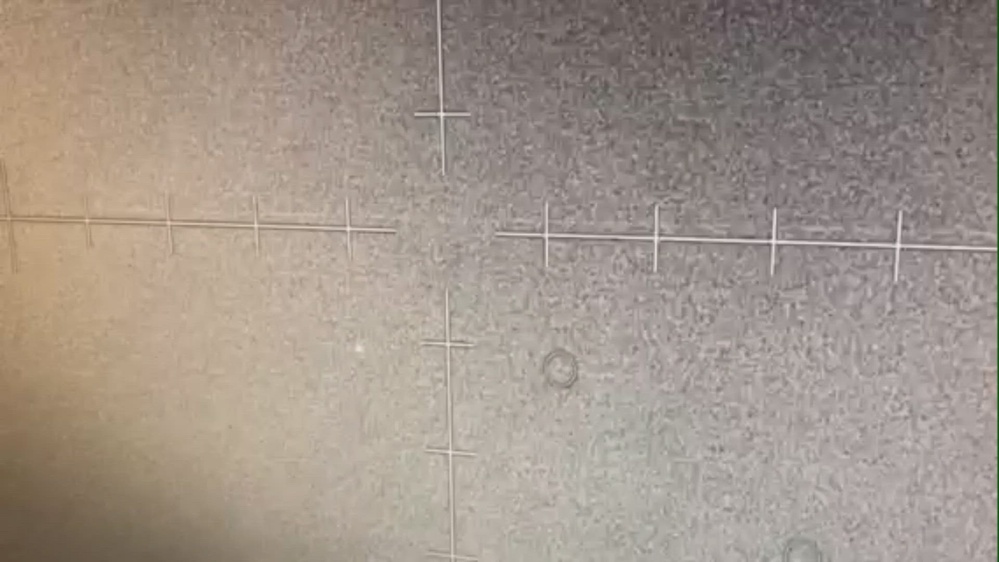
Source file: DOW-UAP-D101_IIR_Unresolved-UAP-Report-Gulf-of-Oman_2021.pdf Originating agency: U.S. Department of War; Air Force Special Operations Command (AFSOC), Hurlburt Field, Florida Document type: Intelligence Information Report (IIR), number 3024(1) Date: Incident 8 September 2021; report disseminated 27 April 2022 (DTG 271329ZAPR22) Classification: Classified at the time, with portion markings; released with redactions (Approved for Release to MRO 03/26/26) Page count: 7 VIRIN: 260807-D-D0360-1090 PURSUE Release: 5
Summary
This is an Intelligence Information Report disseminated by U.S. Air Force Special Operations Command in April 2022, roughly eight months after the event it documents. The report is titled "Multiple Unidentified Aerial Phenomenon Observed Maneuvering Erratically and In Formation Over Gulf of Oman During AC-130 Gunship Live Fire Training on 8 September 2021."
The document is raw reporting, not an assessment. This product type is designed to disseminate unevaluated intelligence information derived from a human source, and serves as input to later all-source assessments. The source is described as having had direct access to the reported information through the conduct of official duties, and as having been aware the information would be provided to the U.S. government.
The report's official summary states that while conducting a live fire exercise in the Gulf of Oman, an AC-130 gunship observed approximately 25 instances of UAPs. The phenomena were observed as cold orbs flying at lower altitudes between 250 and 1,300 mph in different formations as well as maneuvering aggressively. In addition, it records, "UAPs also appeared to react to the aircraft firing its main cannon."
Research Article
Circumstances of the first observation
Under the heading "INITIAL OBSERVATION," the report records that on 8 September 2021 a U.S. Special Operations Forces AC-130 gunship was conducting live fire training in the Gulf of Oman during a period of darkness, in the vicinity of a grid reference given in MGRS format and partly redacted in the release.
The sequence described is precise and operational. The aircraft dropped a water-activated flare to use as a mock target and entered an orbit around it. The Combat Systems Officer conducted collateral scans with the aircraft's Electro-Optical/Infrared sensor in the vicinity of the flare. When he slewed the sensor in IR mode back to the flare, he observed two approximately four-foot diameter cold orbs between 0 and 20 feet above the surface of the water, stationary over the flare for approximately 15 seconds.
What happened at the end of those fifteen seconds is the sharpest detail in the report. The officer pulled the trigger, firing the aircraft's 105mm cannon. The report is emphatic about the timing window: "Immediately upon pulling the trigger, during the slight delay between trigger pull and the cannon's recoil, the CSO observed the pair of UAPs rapidly fly away from the flare and out of the sensor feed without changing altitude."
That description, whether it reflects a response to a physical event or a coincidence, is documented in the report as given: the reaction preceded the recoil, and therefore the noise and the shock, rather than following them.
Approximately 25 instances across the sortie
The "SUBSEQUENT OBSERVATIONS" section widens the scope of the event. Across the sortie the crew observed approximately 25 instances of UAPs, viewed in IR as cold orbs in both white-is-hot and black-is-hot mode, that is, in both polarities of the thermal display.
The most detailed description concerns two objects observed flying in a loose but coordinated formation, increasing and decreasing altitude like a wave while maneuvering around, over, and under each other. The simile the reporter chose is unusual in the context of an intelligence document: "in a manner similar to how dolphins playfully swim in a pod." And in parentheses, explicitly marked as a source comment, comes the line: "(SOURCE COMMENT: They [The UAPs] knew they were flying together)."
Separately, UAPs were observed flying in a formation of three, and separately again flying erratically and maneuvering aggressively. The report notes that the attached videos depict a smoothly slewing EO/IR sensor or a stationary EO/IR sensor with multiple UAPs darting around the sensor feed.
The recorder that failed
The section closes with a detail of direct evidentiary significance: "The AC-130's crew attempted to save entirety of the EO/IR footage of the UAP observations but the aircraft's Digital Video Recorder (DVR) inexplicably failed and the video data became corrupted."
This is why the six videos accompanying the report are not primary sensor data but a secondary capture: someone filmed the sensor display screen with a cellular device. The official caption on the videos says so explicitly, warning that the method introduces limitations in fidelity, resolution and overall visual quality, and that artifacts inherent to filming a screen, such as blurring or flickering, may be present. What survives in the archive, in other words, is a recording of a screen that displayed what the primary system was supposed to have saved.
The speeds
The "ESTIMATED SPEED" section describes the computation method. The Combat Systems Officer calculated the UAP's approximate speeds using the aircraft's TACTOOL, a tactical computation aid, and clocked their maximum observed maneuvering speed at 1,300 mph and their minimum observed maneuvering speed at 250 mph. The closing sentence is short: "No means of propulsion were observed."
These figures deserve their context: they were derived from an onboard computation tool during an operational sortie, not from a laboratory measurement, and the report itself qualifies all its descriptive and estimative language as reflecting the reporter's subjective interpretation at the time of the event.
The distribution chain
The breadth of the report's distribution list illustrates how seriously it was handled. The report was sent from AFSOC at Hurlburt Field, Florida, and distributed to, among others, the Air Force intelligence agency, U.S. Central Command, U.S. Special Operations Command, the Joint Special Operations Command, the National Ground Intelligence Center, the Chairman of the Joint Chiefs of Staff and the National Military Command Center, the Chief of Naval Operations, and the U.S. Embassy in Muscat. The report notes it was coordinated with the U.S. Defense Attaché Office in Muscat and with the theater special operations J2X without comment, and that Source A is available for recontact regarding the information in the report. The geographic coordinates, it records, were derived from the AC-130 sensor feed GPS data.
Significance
This is one of the most detailed operational documents in the collection, and its weight comes from a combination of factors. First, it involves a professional aircrew operating an electro-optical and infrared sensor suite as part of their routine work, not incidental eyewitnesses. Second, the observation ran across an entire sortie and comprised roughly 25 instances, rather than a single fleeting glimpse. Third, visual documentation exists, however degraded, in six videos linked directly to the report. Fourth, the report records an apparent reaction by the phenomena to an action by the aircraft, and that is a rare category of finding in official documentation.
At the same time it is important to preserve the distinction the report itself draws: an IIR is raw information, not a conclusion. It does not determine what the objects were, offers no hypothesis as to their origin, and contains no AARO assessment. The failure of the video recorder left the case without its original sensor data, and that is precisely the kind of evidentiary gap the historical documents in the collection, including Cabell's 1948 letter and the Navy's 1953 film analysis, complain of again and again.
Key People
| Role | Identity | Notes |
|---|---|---|
| Principal observer | Combat Systems Officer (CSO) of the AC-130J | Conducted the scans, pulled the trigger, and computed the speeds on TACTOOL |
| Collector | AFSOC A2OX | Identified in the report by a designator reflecting the AFSOC intelligence branch |
| Source | "Source A" | Direct access through the conduct of official duties; available for recontact |
| Aircrew | AC-130J gunship crew, USSOF | Attempted to save the footage; the video recorder failed |
Locations
| Location | Details |
|---|---|
| Gulf of Oman | The training and observation area, during a period of darkness, 8 September 2021 |
| Hurlburt Field, Florida | Origin of the report's dissemination, AFSOC headquarters |
| Muscat, Oman | The U.S. Embassy; the report was coordinated with the Defense Attaché Office there |
| MacDill, Florida | CENTCOM and USSOCOM headquarters on the distribution list |
Incidents
| Incident | Date | Location | Pages |
|---|---|---|---|
| Two stationary cold orbs over a flare, fleeing on the trigger pull | 8 September 2021, night | Gulf of Oman | 2 |
| Approximately 25 UAP instances across the sortie, including formations of two and three | 8 September 2021, night | Gulf of Oman | 2 |
| Failure of the digital video recorder and corruption of the data | 8 September 2021 | Gulf of Oman | 2 |
| Dissemination of the Intelligence Information Report | 27 April 2022 | AFSOC, Hurlburt Field | 1-3 |
Notable Quotes
"On 8 September 2021 a USSOF AC-130 Gunship observed approximately 25 instances of UAPs while conducting a live fire exercise in the Gulf of Oman." -- report summary
"When the CSO slewed the sensor in IR mode back to the flare they observed two approximately four-foot diameter cold orbs between 0 to 20 feet above the surface of the water stationary over the flare for approximately 15 seconds." -- page 2
"Immediately upon pulling the trigger, during the slight delay between trigger pull and the cannon's recoil, the CSO observed the pair of UAPs rapidly fly away from the flare and out of the sensor feed without changing altitude." -- page 2
"Two UAPs were observed flying in a loose but coordinated formation increasing and decreasing altitude like a wave while maneuvering around, over, and under each other in a manner similar to how dolphins playfully swim in a pod." -- page 2
"(SOURCE COMMENT: They [The UAPs] knew they were flying together)." -- page 2
"The AC-130's crew attempted to save entirety of the EO/IR footage of the UAP observations but the aircraft's Digital Video Recorder (DVR) inexplicably failed and the video data became corrupted." -- page 2
"The CSO calculated the UAP's approximate speeds using the aircraft's TACTOOL and clocked their maximum observed maneuvering speed at 1300 miles per hour (MPH) and the UAPs minimum observed maneuvering speed at 250 MPH. No means of propulsion were observed." -- page 2
Related Video
Source: DVIDS · U.S. Department of Defense
Related Articles
- DoW/DoD · 2020-07-16
Mission Report DOW-UAP-D65: Three UAP Observations in the Persian Gulf, July 16, 2020
USCENTCOM Mission Report Misrep 4472514 documents three separate observations of an unidentified aerial phenomenon during a single ISR sortie over the Persian Gulf, the Strait…
- DoW/DoD · 2020-09-15
Mission Report DOW-UAP-D62: UAP Observation, Link-Loss Events, and Iranian Air-Defense Intercepts over the Strait of Hormuz, September 2020
Mission Report MISREP 4782130 from the U.S. Air Force 482 ATKS / 432 AEW documents an intense 21-hour ISR sortie over the Strait of Hormuz…
- DoW/DoD · 2020-10-01
Mission Report DOW-UAP-D63: UAP Observation in the Strait of Hormuz, October 2020
Mission Report MISREP 4871281 from the 482 ATKS / 432 AEW under USCENTCOM documents a 21-hour ISR sortie from OKAS (Ali Al Salem, Kuwait) over…
- DoW/DoD · 2020-11-02
Mission Report DOW-UAP-D64: Two UAP over the Arabian Gulf during an IRGCN-Focused ISR Mission, November 2020
Mission Report MISREP 5039166 from the 482 ATKS / 432 AEW documents two UAP observations five minutes apart on November 2, 2020, over the Arabian…